


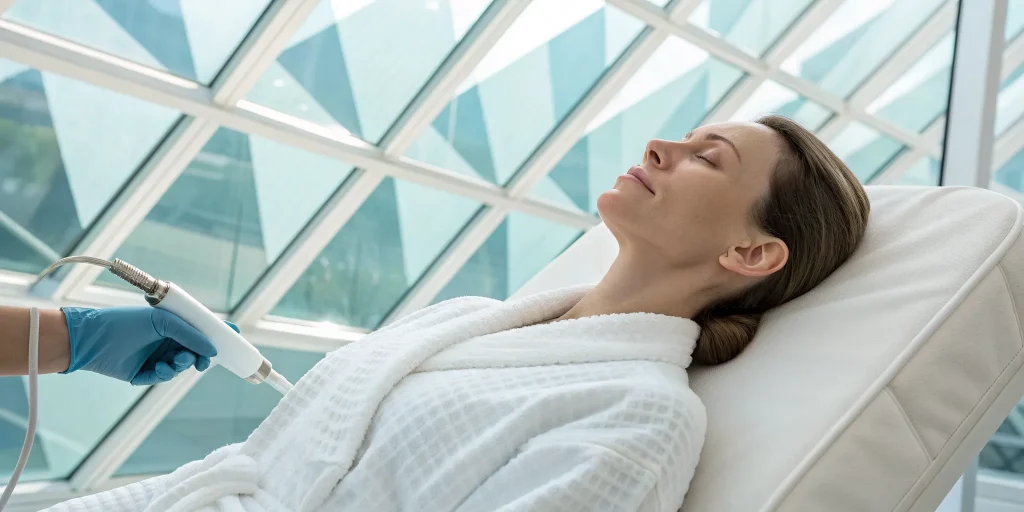
You’ve likely seen the many options for treating acne scars, from chemical peels to traditional microneedling. But RF microneedling is a level up. It combines the collagen-stimulating power of microneedles with skin-tightening radiofrequency energy. This dual-action approach delivers more dramatic results, especially for those stubborn, indented scars.
Naturally, this advanced technology comes with a different price point. Understanding the RF microneedling cost is key to deciding if it’s the right investment for you. We’ll break down exactly what goes into the price so you can create a realistic budget for achieving truly smooth skin.
Key Takeaways
- It works by rebuilding skin from within: RF microneedling uses a combination of fine needles and gentle heat to trigger your body’s natural healing response, stimulating new collagen to fill in and smooth indented acne scars.
- Budget for a series of treatments: Achieving your final goal is a process, not a single appointment. Most people need multiple sessions, so it’s wise to plan for a complete treatment package rather than a one-time cost.
- Your best results appear gradually: While you may see some initial improvement, the most significant changes happen over several weeks and months as your skin builds new collagen, so patience is essential for seeing the full effect.
What Conditions Can RF Microneedling Treat?
One of the best things about RF microneedling is its versatility. It’s not a one-trick pony; instead, it’s a powerhouse treatment that can address a wide range of common skin concerns all at once. Whether you’re focused on signs of aging, leftover acne scars, or just want to improve your overall skin quality, this procedure can be tailored to meet your specific goals. Here are some of the most common conditions we see it work wonders on.
Fine Lines, Wrinkles, and Loose Skin
If you’re starting to notice fine lines around your eyes or a little less firmness along your jawline, you’re not alone. RF microneedling addresses these concerns by working deep within the skin. The treatment uses tiny, sterile needles to create micro-channels, which your body perceives as tiny injuries that need healing. This process alone stimulates new collagen. But the ‘RF’ part adds another layer of effectiveness. The needles also deliver radiofrequency heat into the dermis, which causes existing collagen fibers to contract and tighten while also giving an extra signal to produce new collagen and elastin. The result is smoother, firmer, and more youthful-looking skin that improves over time.
Acne Scars and Enlarged Pores
For many of us, the reminders of past breakouts can stick around long after the acne is gone. RF microneedling is particularly effective for atrophic acne scars—the indented or pitted kind—because it helps rebuild the skin from the inside out. The combination of microneedles and radiofrequency energy breaks down old scar tissue and triggers a powerful collagen-remodeling process. As your skin produces fresh, healthy collagen, it fills in the depressions, leading to a much smoother surface. This same skin-tightening effect also helps minimize the appearance of enlarged pores, giving your complexion a more refined and even look.
Uneven Skin Texture and Sun Damage
Sometimes your main concern isn’t a specific wrinkle or scar, but an overall lack of smoothness or radiance. Sun damage, environmental factors, and time can all contribute to a rough or uneven skin texture. RF microneedling acts as a powerful resurfacing treatment. By promoting cellular turnover and stimulating the growth of new, healthy skin cells, it helps smooth away roughness and can even improve some forms of sun-induced pigmentation. It essentially gives your skin a reset, helping to restore the even tone and soft texture that can be compromised by years of sun exposure.
Stretch Marks
Stretch marks, whether from growth spurts, pregnancy, or weight fluctuations, can be one of the most stubborn skin concerns to address. They form when the skin’s dermal layer is stretched too quickly, causing collagen and elastin fibers to tear. RF microneedling is an excellent option because it directly targets this damaged layer. The controlled thermal energy and micro-injuries work together to break up the fibrous tissue of the stretch mark and kickstart the production of new, organized collagen. Over a series of treatments, this helps to improve the texture and color of the marks, making them significantly less noticeable.
How Does RF Microneedling Heal Acne Scars?
If you’re tired of acne scars making you feel self-conscious, RF microneedling might be the solution you’ve been looking for. It’s a powerful, minimally invasive treatment that helps smooth and resurface your skin by working from the inside out. Unlike topical creams that only treat the surface, this procedure targets the deeper layers of your skin where scars form, encouraging your body to heal itself and create a smoother, more even texture. Let’s break down how it works and what makes it so effective.
How the Technology Renews Your Skin
RF microneedling combines two proven skin rejuvenation techniques into one highly effective treatment. First, the “microneedling” part uses ultra-fine needles to create tiny, controlled punctures in your skin. These micro-injuries signal your body to kickstart its natural healing process. In response, your skin begins to produce new collagen and elastin, the essential proteins that give your skin its firmness and structure. Then, the “RF” (radiofrequency) part delivers gentle heat energy through the needles deep into the dermis. This heat gives the collagen-building process an extra push, helping to remodel scar tissue and tighten the skin for even better results.
Is It Better Than Traditional Microneedling?
You might have heard of traditional microneedling, and while it’s a great treatment, adding radiofrequency takes it to the next level. Standard microneedling relies solely on the physical needles to stimulate collagen. RF microneedling, however, adds thermal energy to the equation. This heat penetrates much deeper than the needles alone, creating a more robust healing response. The result is enhanced collagen remodeling, which leads to more significant improvements in skin texture, firmness, and scar reduction. Think of it as giving your skin’s natural repair system a supercharged boost, making it a more powerful option for tackling stubborn acne scars.
Will It Work on My Type of Acne Scars?
RF microneedling is particularly effective for treating atrophic acne scars, which are the indented or pitted scars left behind after a breakout heals. These include common types like boxcar, ice pick, and rolling scars. Because these scars are caused by a loss of collagen, the treatment’s ability to stimulate new collagen growth is exactly what’s needed to fill in those depressions. The radiofrequency energy helps break down the tough, fibrous scar tissue that pulls the skin down, allowing fresh, healthy skin to take its place. This makes it a versatile solution for many of the most common and frustrating types of acne scars.
Don’t Believe These RF Microneedling Myths
Let’s clear up a few common misconceptions about this treatment. First, there’s a myth that RF microneedling is only for anti-aging or for older individuals. The truth is, it’s an excellent option for adults of all ages who want to improve their skin texture, especially when it comes to acne scars. Another myth is that you’ll see perfect results after just one session. While you will likely notice improvements after your first appointment, achieving your final goal often requires multiple treatments. Consistency is key, as each session builds upon the last to progressively remodel scar tissue and create smoother, healthier skin over time.
Breaking Down the RF Microneedling Cost
Let’s talk about the investment. Deciding to treat acne scars is a big step, and it’s smart to have a clear picture of the costs involved. The price of RF microneedling isn’t a simple, one-size-fits-all number. It varies based on where you live, the provider you choose, and the specifics of your treatment plan. Think of it less as a one-time expense and more as an investment in your skin’s long-term health and your confidence.
While the initial price tag might seem higher than other facial treatments, the transformative and lasting results often make it a worthwhile choice for those struggling with stubborn acne scars. Instead of covering scars with makeup, you’re working to heal the skin from within. To help you plan, let’s break down the typical costs so you can feel prepared and make an informed decision that feels right for you and your budget.
How Much Should You Expect to Pay?
When you start looking into RF microneedling, you’ll find that a single session typically averages around $900. This is a helpful starting point, but remember that it’s just a national average. The final price can shift depending on the clinic’s reputation, the technology they use, and the overall cost of living in your area. It’s always a good idea to schedule consultations with a few reputable providers to get a precise quote tailored to your specific skin concerns and goals.
Single Session Pricing
While the national average gives you a good baseline, the cost for a single RF microneedling session generally falls between $500 and $1,500. This range accounts for factors like your geographic location—treatments in major cities tend to cost more—and the expertise of your provider. A board-certified dermatologist or a highly experienced aesthetician at a reputable med spa will likely charge more than a newer clinic. Remember, this price typically covers the treatment for your full face. If you’re only looking to treat a smaller area, the cost might be lower, so it’s always worth asking during your consultation.
The Cost of Different Devices
Not all RF microneedling devices are created equal, and the technology used can significantly influence the price. For example, a session with a popular device like Vivace might cost around $850, while treatments with Secret RF can range from $500 for small areas to over $1,000 for the full face. More intensive systems, such as Profound RF, which deliver stronger energy for more dramatic results, can cost anywhere from $1,800 to $5,000 per session. The right device for you depends on your specific skin concerns and goals, which is why a thorough consultation with a knowledgeable provider is so important to create a treatment plan that fits your needs.
Pricing Per Session vs. Package Deals
Digging a bit deeper, the cost for a single RF microneedling session can range anywhere from $1,000 to $2,400. This wider range often reflects the sophistication of the technology being used. For example, treatments with advanced devices like the Lutronic Genius RF can land on the higher end of that spectrum. The price difference is usually tied to the device’s precision and effectiveness, as well as the practitioner’s level of expertise. A more experienced provider using top-tier equipment will naturally command a higher price for their services.
Calculating Your Total Treatment Cost
It’s important to remember that achieving smooth, scar-free skin is a process, not a one-and-done appointment. Most people need a series of treatments to see the best results, so your total investment will be more than the cost of a single session. Because RF microneedling is considered a cosmetic procedure, it’s generally not covered by insurance. This means the total out-of-pocket investment is something to plan for. Many modern medspas understand this and offer packages or membership plans to make consistent treatment more accessible and affordable.
Are There Ways to Make Treatment More Affordable?
The good news is that you don’t have to pay for your entire treatment series all at once. Since consistent sessions are essential for getting the results you want, many clinics have created flexible payment structures to make the investment more manageable. This allows you to focus on your skin’s transformation without the stress of a single large payment. From traditional financing to innovative membership plans, there are practical ways to fit your skincare goals into your budget. Let’s look at a couple of the most common options.
Financing and Payment Plans
If you prefer to pay for your treatment series over time, many clinics offer helpful financing options or in-house payment plans. These plans allow you to break down the total cost of your package into smaller, more manageable monthly installments. It’s a straightforward way to budget for your treatments without having to delay your journey to smoother skin. During your consultation, don’t hesitate to ask the clinic’s patient coordinator what kinds of payment solutions they provide. They can walk you through the application process and help you find a plan that works for your financial situation.
Considering a Membership Model
Another approach that’s becoming increasingly popular is the medspa membership. Instead of paying for each service or package individually, a membership model allows you to pay a predictable monthly fee for ongoing access to a wide range of treatments, including advanced services like RF microneedling. This is a fantastic option if you’re committed to long-term skin health, as it often makes consistent care more affordable and encourages you to maintain your results. It simplifies budgeting and gives you the freedom to address various skin concerns as they arise, all under one simple, all-inclusive plan.
Is It More Expensive Than Other Scar Treatments?
To put the price in perspective, it helps to compare it to other options. Traditional microneedling, which doesn’t include radiofrequency, is more affordable, typically costing between $300 and $700 per session. The higher price of RF microneedling is due to the addition of radiofrequency energy, which heats the underlying layers of skin to stimulate a more intense collagen and elastin response. This dual-action approach generally delivers more dramatic and faster results, making it a more powerful solution for deeper or more textured acne scars. You can explore a full microneedling cost guide to see how different treatments stack up.
What Determines Your Final RF Microneedling Cost?
When you start looking into RF microneedling, you’ll quickly notice that the price isn’t one-size-fits-all. The final cost depends on a few key things, from where you live to the specifics of your treatment plan. It can feel a bit like a puzzle, but understanding these factors will help you get a clearer picture of the investment and find a plan that works for you without any surprises. Think of it less as hunting for a bargain and more as finding the right value for your unique skin goals.
The total price tag is a reflection of several components working together. Your provider’s level of training, the city you’re in, and the technology being used all play a part. A comprehensive treatment plan that addresses extensive scarring will naturally be a different investment than one targeting a few minor spots. By breaking down what goes into the pricing, you can ask the right questions during your consultation and feel confident that you’re making a smart, informed decision for your skin’s future. Let’s walk through the main elements that shape the cost.
Why Your City Affects the Price
Just like a cup of coffee costs more in a big city, so do cosmetic treatments. The price of RF microneedling can change quite a bit depending on your city and state. Clinics in areas with a higher cost of living, like Los Angeles or New York, generally have higher overhead expenses, which translates to higher treatment prices. For example, the average microneedling cost can be significantly different from one state to another. This is a standard part of the industry, so it’s helpful to research what local providers in your area are charging to set a realistic budget.
A Note on Global Pricing
When you’re looking into RF microneedling for acne scars, it’s good to know that the cost isn’t set in stone. The price can vary quite a bit based on where you are, the clinic you choose, and the specifics of your treatment. While the national average for one session hovers around $900, you’ll often see prices ranging anywhere from $1,000 to $2,400. This gap usually reflects the sophistication of the technology being used—more advanced devices often deliver more precise, effective results, which comes with a higher price tag. Remember, getting that smooth, clear skin you want is a process. Most people need a series of treatments to see their final results, so it’s smart to think about the total investment rather than just a single session cost. And since RF microneedling is considered a cosmetic treatment, it’s typically not covered by insurance, meaning you’ll want to plan for the full out-of-pocket expense.
Paying for Expertise: Does Your Provider Matter?
Who performs your treatment is one of the biggest factors in determining the cost. A board-certified dermatologist or plastic surgeon will typically charge more than a licensed aesthetician at a medical spa. This price difference reflects their years of advanced medical training, in-depth knowledge of skin anatomy, and ability to handle any potential complications. While it might be tempting to go for the lowest price, remember that you’re investing in your skin’s health and safety. An experienced provider can deliver better, more consistent results, making the higher price of microneedling a worthwhile investment in quality and peace of mind.
How the Size of the Treatment Area Changes the Cost
The cost of your RF microneedling sessions will also depend on the area you want to treat. Treating a few acne scars on your cheeks will naturally cost less than addressing widespread scarring across your full face, neck, or back. Larger or more complex areas require more time, more product, and more of the provider’s attention, which is reflected in the price. During your consultation, your provider will assess the target area and map out a plan, giving you a precise quote based on the scope of the work needed to achieve your goals.
Clinic vs. Medspa: Does It Make a Difference?
The facility itself plays a role in pricing. A high-end medical spa in a premium location with state-of-the-art technology and luxurious amenities will likely have higher prices than a smaller, more basic clinic. The clinic’s reputation and the demand for its services also influence cost. At Novuskin, we focus on providing exceptional value through our membership model. Instead of unpredictable per-session fees, you get consistent, high-quality care for a predictable monthly price. This approach makes it easier to budget for your long-term skin health without compromising on the quality of the environment or the technology used.
The Cost of Combination Therapy
RF microneedling works beautifully on its own, but it’s often combined with other treatments to maximize results. Your provider might recommend pairing it with a chemical peel, a hydrating facial, or other therapies to address different aspects of your skin health simultaneously. While adding more services will increase the overall cost of your treatment plan, this comprehensive approach can often lead to more dramatic and lasting improvements. Think of it as creating a personalized skincare strategy. Your provider can help you decide which combination of treatments will give you the best return on your investment for clear, smooth skin.
Adding Platelet-Rich Plasma (PRP)
To give your treatment an extra edge, your provider might suggest adding Platelet-Rich Plasma, or PRP. This is a concentrated serum created from a small sample of your own blood, rich in growth factors that are essential for healing. When applied to your skin after RF microneedling, the PRP sinks deep into the micro-channels created by the needles, where it can significantly enhance your body’s natural repair process. This powerful combination can lead to faster healing, reduced redness, and even more impressive collagen production. Adding PRP will increase the overall cost, with some packages for the face and neck reaching into the $2,000–$3,000 range, but many find the enhanced results are well worth the investment.
Other Serum Add-Ons
Beyond PRP, many clinics offer a menu of specialized serums that can be added to your treatment to target specific concerns. These boosters are designed to address everything from intense hydration to stubborn pigmentation. For example, you might see options like a “salmon DNA” serum, also known as Rejuran, which is praised for its skin-repairing properties. These add-ons typically come at an extra cost, sometimes ranging from $300 to $500 per session on top of the base price of the RF microneedling. During your consultation, be sure to ask about which serums might be right for you. A customized approach ensures you’re not just treating acne scars but also improving your skin’s overall health and radiance.
How Many Sessions Will You Need to See Results?
One of the most common questions I get is, “How long until I see a change?” It’s completely understandable. You’re investing your time and money, and you want to know what to expect. With RF microneedling, results are cumulative. This isn’t a one-and-done treatment; it’s a process that works with your body’s natural healing cycle to rebuild collagen and smooth out texture over time.
Think of it like starting a new fitness routine. You don’t see a dramatic transformation after one trip to the gym, but with consistency, the results build on each other. Most people require a series of sessions to achieve their desired outcome. Your provider will work with you to create a personalized treatment plan, but the journey to smoother skin is a partnership. Your patience and commitment to the full series of treatments are just as important as the technology itself.
How Many Sessions for Mild vs. Severe Scars?
While your specific plan will be tailored to you, we can talk about some general guidelines. For most types of acne scars, a series of three to six sessions is a great starting point. These appointments are usually spaced about four to six weeks apart to give your skin ample time to heal and begin producing new collagen between visits.
Lighter, more superficial scarring might see significant improvement after just two or three treatments. However, for deeper, more established scars, like boxcar or rolling scars, you’ll likely need to be on the higher end of that range to see the best results. The goal is to progressively remodel the scar tissue, and each session builds on the progress of the last.
Factors That Influence Your Treatment Plan
So, why isn’t there a magic number of sessions for everyone? Several factors come into play, making each person’s treatment plan unique. The most significant factor is the type and severity of your acne scars. Deeper, older scars simply require more work to break down and rebuild than newer, shallower ones.
Your skin type and your body’s individual healing response also play a huge role. Some people naturally produce collagen more quickly than others. Your age and overall skin health are part of this equation, too. Finally, your personal goals matter. Are you looking for a subtle improvement or a more dramatic transformation? During your consultation, your provider will assess all these factors to give you a realistic timeline.
Special Considerations for Mature Skin
As our skin matures, the natural decline in collagen and elastin leads to those common signs of aging we all know—fine lines, wrinkles, and a loss of firmness. The great news is that RF microneedling is not only safe but also incredibly effective for addressing these concerns. It works by tapping into your skin’s own healing power. The combination of tiny needles and gentle heat creates a controlled healing response, prompting your body to build fresh, new skin from the inside out. When your skin heals from these micro-channels, it ramps up the production of collagen and elastin, the proteins responsible for keeping your skin firm, smooth, and resilient.
This process makes RF microneedling a fantastic option for improving skin texture and elasticity. It’s a treatment that truly helps your body generate younger-looking skin by restoring what time has taken away. For the best results, a consistent approach is key. We typically recommend a series of treatments every four to six weeks to start, followed by maintenance sessions every couple of months. RF microneedling also pairs beautifully with other anti-aging treatments, like medical-grade facials or chemical peels, to enhance your results even further for a truly revitalized appearance.
Understanding the Safety and Side Effects
It’s smart to be informed about the safety of any treatment you’re considering. The good news is that RF microneedling is a very safe procedure when performed by a qualified and experienced professional. The most common side effects are temporary and mild, including redness, minor swelling, and a feeling similar to a sunburn. These typically fade within a day or two.
Some people might experience light bruising or pinpoint bleeding, but this is also short-lived. A great provider will review your medical history to ensure you’re a good candidate and minimize any risks. You can learn more about general microneedling safety from trusted sources like the American Academy of Dermatology.
Common, Temporary Reactions
It’s completely normal to wonder what to expect after your appointment. The great thing about RF microneedling is that the downtime is minimal. Most people experience some temporary redness and minor swelling, similar to how your skin feels after a day in the sun. These effects are your skin’s natural response to the treatment and a sign that the healing process has begun. You might also notice some tiny pinpoint marks or light bruising, but these reactions typically calm down within 24 to 48 hours. Understanding the full range of potential side effects helps you feel prepared, and this quick recovery is one of the reasons so many people find it easy to fit into their busy schedules.
How to Prepare for Your Appointment
Getting the best results starts before you even walk into the treatment room. Following a few simple steps can make your session smoother and more effective. For about a week before your appointment, it’s best to avoid direct sun exposure and stop using active skincare ingredients like retinoids or exfoliating acids in the treatment area.
You should also hold off on any other facial treatments, like Botox or fillers, for at least two weeks prior. On the day of your appointment, arrive with a clean face, free of any makeup or lotions. Your provider will give you a detailed list of instructions, so be sure to follow them closely. Proper preparation helps ensure your skin is in the best possible condition to heal and respond to the treatment.
Medications and Supplements to Pause
To minimize bruising and pinpoint bleeding, it’s important to press pause on certain medications and supplements about a week before your treatment. Common over-the-counter drugs like Aspirin, Ibuprofen, and Naproxen can interfere with normal blood clotting, so it’s best to avoid them. The same goes for supplements known for their blood-thinning properties, such as fish oil, vitamin E, and ginkgo biloba. Additionally, you’ll want to stop using topical retinoids and strong exfoliants on the treatment area for five to seven days beforehand, as these can make your skin extra sensitive. Your provider will give you a complete list of what to avoid during your consultation.
Preventing Cold Sore Flare-Ups
If you have a history of cold sores, even if you haven’t had one in years, it’s crucial to let your provider know. The micro-injuries created during the RF microneedling process can sometimes trigger a flare-up of the herpes simplex virus. This is a common and easily managed situation, but it requires a proactive approach. To be safe, your provider may prescribe an antiviral medication for you to take before and after your appointment to prevent an outbreak. Being open about your medical history ensures your treatment is as smooth and comfortable as possible.
What to Expect During and After Your Treatment
Knowing what comes next can make all the difference in your skincare journey. After your RF microneedling session, your skin begins a natural healing process that leads to a smoother, clearer complexion. Here’s a straightforward timeline of what you can expect during your recovery and when you’ll start to see those beautiful results.
What to Expect During and After Your Treatment
Knowing what to expect can make any new experience feel more comfortable, and your RF microneedling appointment is no exception. Once you’ve done your prep work, you can walk into the clinic feeling confident and ready. The procedure itself is very methodical, and your provider’s main goal is to keep you comfortable while delivering amazing results. After the session, your skin kicks off a fascinating healing process that gradually reveals a smoother, clearer complexion. To give you a clear picture, let’s walk through what happens during the treatment and what you can expect in the hours and days that follow.
A Step-by-Step Look at the Procedure
Walking into your appointment, it helps to have a mental map of what will happen. The process is very straightforward and designed entirely with your comfort in mind. From the moment you settle in, your provider will guide you through each step, making sure you feel relaxed and fully informed about the procedure. This is never a rushed experience; there is dedicated time built in for preparation to ensure the treatment is as comfortable and effective as it can be. A great provider knows that a calm patient gets the best results. Let’s walk through the key phases of the appointment so you know exactly what to expect.
Numbing and Preparation Time
Your appointment will begin with your provider thoroughly cleansing your skin to remove any impurities and create a clean slate for the treatment. Once your skin is prepped, a topical numbing cream will be applied generously to the entire area. This is a crucial step that helps minimize any discomfort during the procedure, making the whole experience much more pleasant. The cream typically needs about an hour to take full effect, so this is your time to sit back, listen to music, or just relax. Once you’re fully numb, the cream is carefully removed, and your skin is cleansed one more time before the microneedling begins.
What the Treatment Feels Like
Once the treatment starts, you can expect to feel a combination of pressure and a quick, stinging sensation, often described as a rubber band snapping against the skin. Thanks to the powerful numbing cream, this feeling is generally very tolerable for most people. You might notice that the sensation varies across different parts of your face; areas with less fatty tissue, like your forehead or jawline, might feel a bit more sensitive than your cheeks. A skilled provider will communicate with you throughout the entire process, checking in to ensure your comfort level is managed and adjusting as needed to keep you at ease.
What Happens Immediately After Treatment?
Right after your session, it’s completely normal for your skin to look and feel like you have a mild sunburn. You can expect some redness and swelling, which is just a sign that your skin’s healing and collagen-building processes have been activated. You might also notice tiny pinpricks or small red dots on the treated areas. Don’t worry, this is a temporary and expected part of the recovery. This initial phase of redness and sensitivity typically subsides within a day or two, though minor marks can sometimes last a bit longer as your skin repairs itself from within.
Your Post-Treatment Care Checklist
Your provider will give you a personalized aftercare plan, and following it is key to getting the best results. For the first 24 to 72 hours, treat your skin gently. Avoid strenuous exercise, saunas, and anything that makes you sweat, as this can irritate your sensitive skin. It’s also best to skip makeup for a couple of days to let your skin breathe and prevent any bacteria from entering the microchannels. Instead, focus on using a gentle cleanser and a hydrating, non-comedogenic moisturizer. A cool compress can also feel wonderful and help reduce any swelling you might experience.
Optional Post-Treatment Enhancements
While RF microneedling is a powerhouse treatment on its own, you can often amplify your results by pairing it with other services. Think of it as creating a personalized skincare strategy that addresses multiple concerns in one go. Your provider might suggest following your session with a calming, hydrating facial to soothe the skin or incorporating a chemical peel in between appointments to further improve texture and tone. This comprehensive approach can lead to more dramatic and lasting improvements. While adding services will affect the total cost, it’s often the most effective way to get the best possible return on your investment for clear, smooth, and healthy-looking skin.
When Will You Start Seeing a Difference?
Patience is your best friend after RF microneedling. The treatment works by stimulating your body’s natural collagen production, which is a gradual process. While you might notice an initial glow shortly after the redness subsides, the most significant changes start to appear around four to six weeks after your first session. This is when the new collagen and elastin begin to remodel your skin, filling in acne scars and improving overall texture. Your results will continue to develop for up to three to six months as your skin becomes firmer, smoother, and more even-toned.
How to Make Your Results Last
RF microneedling creates lasting changes in your skin’s structure, but the results aren’t permanent. Your skin will continue its natural aging process, and new concerns can arise over time. To keep your skin looking its best, you’ll want to plan for maintenance treatments. For acne scars, a follow-up session every six to twelve months is often recommended to preserve your results. A consistent skincare routine at home, including daily sunscreen use, is also essential for protecting your investment and keeping your complexion smooth and clear for the long haul.
Related Articles
- Microneedling RF: Rejuvenate Skin & Boost Collagen | Novuskin
- RF Microneedling Side Effects: What’s Normal?
- How Many RF Microneedling Sessions Do You Need?
- Is RF Microneedling Painful? The Honest Truth
Frequently Asked Questions
Does RF microneedling hurt? This is easily one of the most common questions, and it’s a fair one. We use a strong topical numbing cream before the treatment begins, which makes the entire process very manageable. Most people describe the sensation as a bit of light pressure and a warm feeling as the radiofrequency is applied. Your comfort is a top priority, so your provider will check in with you throughout the session to make sure you’re doing okay.
What is the recovery really like? Can I go to work the next day? You can absolutely plan on heading back to your normal routine quickly. Immediately after the treatment, your skin will be red and feel warm, similar to a mild sunburn. This redness usually fades significantly within 24 hours. While you should avoid makeup and heavy exercise for a day or two, most people feel perfectly comfortable going to work the following day. Your skin will just look a little flushed and glowy.
How do I know if RF microneedling is the right choice for my scars? RF microneedling is a fantastic option for indented acne scars, like boxcar and rolling scars, because it works to rebuild the collagen that was lost. It’s also safe for most skin types and tones. The best way to know for sure if it will help you reach your specific goals is to come in for a consultation. A trained provider can assess your skin in person and confirm if this treatment is the most effective path for you.
Why should I choose this over a laser treatment for my scars? While both are effective, RF microneedling has a key advantage, especially for a wider range of skin tones. Lasers work by delivering heat to the surface of the skin, which can sometimes pose a risk of pigmentation changes. RF microneedling delivers its radiofrequency heat deep into the skin through tiny needles, bypassing the surface. This makes it a very safe and effective option for remodeling scar tissue with a lower risk of surface-level side effects.
Are the results permanent, or will my acne scars come back? The collagen your body produces in response to the treatment is yours to keep, so the structural improvements to the scars are very long-lasting. The scar tissue is remodeled and replaced with healthier tissue. However, your skin will continue its natural aging process. Many people choose to have a maintenance session once a year to keep their skin firm, smooth, and healthy overall.


