


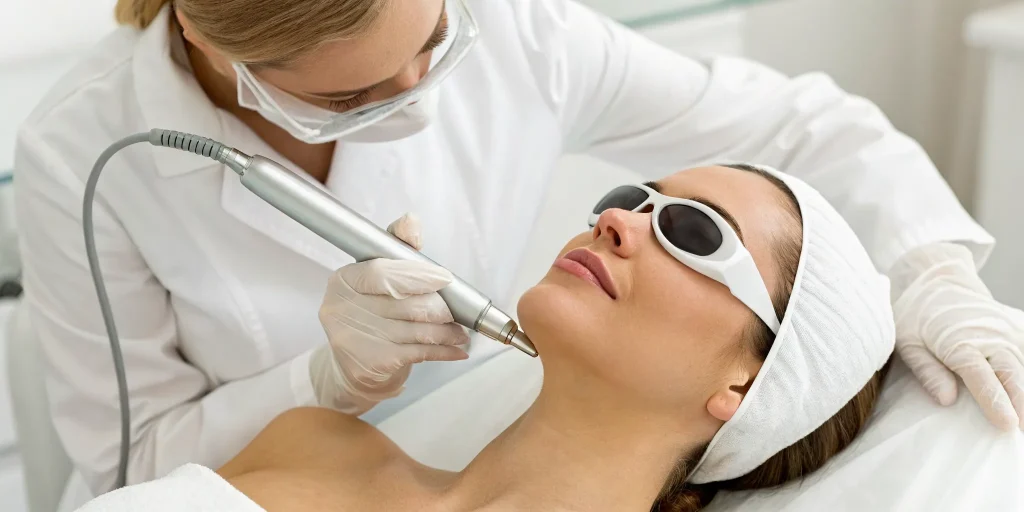
Let’s get right to it: is laser pigmentation removal permanent? For the specific spots we treat, yes. But that isn’t the whole story. Thanks to incredible advancements, modern lasers can now safely perform laser pigment removal on a wider range of skin tones than ever before. Understanding this is key to getting the clear skin you want. We’ll cover how the treatment works to shatter pigment for good. More importantly, we’ll discuss what “permanent” truly means for your skin and the steps you can take to protect your results for years to come.
Key Takeaways
- Lasers Target Pigment with Precision: The treatment uses focused light energy to shatter unwanted pigment from sun spots, melasma, or acne marks without harming the surrounding skin.
- Expect a Series of Treatments: Lasting results come from a personalized plan of multiple sessions, typically three to six, which allows your skin to heal properly and ensures a more even, natural-looking outcome.
- Maintenance Is Key to Lasting Results: While treated spots are gone permanently, you must protect your skin to prevent new ones; daily SPF 50+ sunscreen is the most critical step for preserving your clear complexion.
What Is Laser Pigmentation Removal?
Let’s talk about those stubborn dark spots. Whether they’re from sun-filled vacations, hormonal shifts, or the ghost of a past breakout, uneven pigmentation can be frustrating. While creams and serums have their place, sometimes you need something more powerful. That’s where laser pigmentation removal comes in. It’s a professional, non-invasive treatment that uses focused light to break up the excess pigment causing discoloration. Think of it as a targeted solution to restore your skin’s clarity and even tone, going straight to the source of the issue.
How Lasers Pinpoint and Remove Pigmentation
So, how does a beam of light actually get rid of a dark spot? It’s pretty clever. The laser sends a very specific wavelength of light energy into your skin. This light is absorbed by the dark pigment (melanin) in the unwanted spots, while leaving the surrounding, lighter skin untouched. The energy heats up and shatters the concentrated pigment into tiny particles. From there, your body’s natural cleanup crew, the lymphatic system, takes over. It gradually clears away these little particles, causing the spot to fade and eventually disappear. It’s a precise process that corrects hyperpigmentation from within.
Understanding Wavelengths and Depth
Not all lasers are created equal, and that’s a good thing. Think of it this way: different types of pigmentation live at different layers of your skin. A surface-level sun spot is very different from deeper hormonal melasma. Lasers use specific colors of light, known as wavelengths, to target pigment at various depths. A shorter wavelength might be perfect for a spot near the surface, while a longer one is needed to reach discoloration in the deeper layers. This is why a consultation with a skilled provider is so essential. They can accurately assess your skin and choose the precise laser technology needed to break up the pigment without affecting the healthy tissue around it.
The “Laser Toning” Technique for Melasma
If you have melasma, you know it can be notoriously difficult to treat. Because it’s often triggered by heat and inflammation, many traditional treatments can make it worse. This is where a specialized method called “laser toning” comes in. Instead of using high-intensity energy, this technique uses a gentle, low-power laser over multiple passes. It works by gradually heating and shattering the deep pigment without creating the intense heat that can trigger a flare-up. This approach requires a series of treatments, typically every one to two weeks, to slowly fade the discoloration. It’s a perfect example of how a patient, consistent approach delivers safe and beautiful results for even the most stubborn skin concerns.
The Different Types of Lasers for Pigmentation
If the word “laser” makes you think of something harsh or outdated, it’s time for an update. The technology used for skin treatments has come a long way, making procedures safer and more effective than ever. Today’s advanced lasers, like picosecond lasers, are designed for precision and can be adjusted for different skin types and tones. These advancements in laser technologies mean we can treat a wider range of people safely, with less downtime and better results. At Novuskin, we use state-of-the-art equipment to ensure your treatment is not only effective but also comfortable, giving you the best possible outcome for clear, beautiful skin.
Ablative vs. Non-Ablative Lasers
When you hear about laser treatments, they generally fall into two main camps: ablative and non-ablative. Think of ablative lasers as the more intensive option. They work by removing the very thin, top layers of your skin, which prompts your body to generate new, smoother skin in its place. This approach can produce dramatic results, but it also requires more downtime for healing. On the other hand, non-ablative lasers are much gentler. They work by heating the tissue beneath the skin’s surface to stimulate collagen production without removing any skin. This means you heal faster with minimal downtime, though you might need more sessions to achieve your desired outcome. The right choice depends entirely on your goals, skin concerns, and how much recovery time you can accommodate.
Intense Pulsed Light (IPL)
You’ve probably heard of IPL, and while it’s often grouped with lasers, it’s technically a bit different. Instead of using a single, focused wavelength of light like a laser, IPL uses a broad spectrum of light. This makes it a versatile tool for tackling several issues at once. A skilled provider can adjust the light’s settings to target different concerns, making it effective for surface-level pigmentation like sun spots, freckles, and redness from broken capillaries. Because it’s less intense than many lasers, IPL is great for people looking to correct mild discoloration and achieve a more even overall skin tone with very little downtime. It’s often used to treat pigmentation that is closer to the skin’s surface, like some forms of melasma.
Q-Switched Nd:YAG and Pulsed Dye Lasers (PDL)
Now let’s get into some of the heavy hitters for stubborn pigment. The Q-switched Nd:YAG laser is a popular and highly effective choice, especially for tricky conditions like melasma. Its secret is its longer wavelength, which allows the laser energy to penetrate deeper into the skin to shatter pigment particles without causing significant damage to the surface. This makes it a safer option for a wider range of skin tones, reducing the risk of post-treatment discoloration. Pulsed Dye Lasers (PDL) are also in this category, often used to target red or brown spots. These advanced lasers are excellent for targeting specific, concentrated areas of pigment with precision, offering a powerful solution for spots that haven’t responded to other treatments.
Fractional Lasers
Fractional lasers offer a clever “best of both worlds” approach. Instead of treating an entire area of skin at once, a fractional laser delivers microscopic columns of energy in a grid-like pattern, leaving the surrounding tissue completely untouched. Think of it like aerating a lawn—you’re creating tiny, controlled treatment zones to stimulate renewal without disrupting the whole surface. This method promotes very rapid healing, as the healthy, untreated skin helps repair the treated micro-zones. The result is significant improvement in texture and tone with much fewer side effects compared to traditional ablative lasers. It’s an amazing option for improving overall skin quality while also targeting unwanted pigmentation.
What Kinds of Pigmentation Can Lasers Treat?
So, what kinds of spots are we talking about? You might be surprised by how many different types of skin discoloration can be addressed with laser treatments. The term “pigmentation” is a catch-all for any area where your skin has more melanin, which is what gives skin its color. This can show up as small, dark freckles, larger brown patches, or even the lingering marks left behind by a breakout. The beauty of modern laser technology is its precision. A laser pigmentation removal treatment uses a focused beam of light that is specifically attracted to the dark pigment in your skin. The laser energy gently breaks up this concentrated melanin into tiny particles, which your body’s natural processes then clear away. This allows the treatment to target the unwanted spots while leaving the surrounding, healthy skin untouched. It’s a sophisticated way to address discoloration at its source. From the sun spots that pop up after a summer vacation to the stubborn patches that seem to have a mind of their own, lasers offer a targeted solution for a clearer, more even-toned complexion. Let’s look at the most common types of pigmentation we can treat.
Saying Goodbye to Sun Damage and Age Spots
Those little brown spots that appear on your face, hands, and chest after years of sun exposure have a name: solar lentigines, but most of us just call them sun spots or age spots. They are your skin’s way of showing you where it’s been over-exposed to UV rays. Laser treatments are fantastic for this. The laser’s light is absorbed by the concentrated pigment in these spots, which then breaks it apart. Over the following weeks, you’ll see the spots darken and flake off or simply fade away, revealing clearer skin underneath. It’s a very effective way to reverse some of the visible signs of sun damage and restore a more uniform skin tone.
Tackling Melasma and Hormonal Pigmentation
Melasma appears as patchy, brownish discoloration, often on the cheeks, forehead, and upper lip. It’s famously linked to hormonal changes, which is why it’s sometimes called the “mask of pregnancy.” But birth control and even just your unique hormonal makeup can trigger it, too. Sun exposure is a major factor that makes melasma worse. While melasma can be tricky to treat, lasers are a key part of a successful management plan. By carefully targeting the excess pigment, lasers can break up these stubborn patches. A consistent treatment plan, combined with strict sun protection, is essential to manage melasma and keep it from returning.
Managing Expectations: Improvement vs. Cure
It’s important to think of laser treatments as a powerful tool for improvement, not always a one-time cure. While the laser can permanently destroy the pigment in the spots we treat, it doesn’t change your skin’s natural tendency to produce new ones. Think of it like this: we can clear the current spots, but we can’t prevent future ones from forming if the triggers are still there. The biggest culprits for recurrence are sun exposure and hormonal shifts. This is why a long-term strategy is so important. Lasting results come from a personalized treatment plan, often involving a series of sessions, combined with your commitment to daily SPF 50+ and a solid skincare routine. This partnership ensures we not only correct existing pigmentation but also help you prevent new spots from appearing.
Fading Post-Acne Marks and Other Scars
Have you ever noticed a dark spot that lingers for months after a pimple has healed? That’s post-inflammatory hyperpigmentation, or PIH. It’s your skin’s response to injury or inflammation, whether from acne, a scratch, or even a bug bite. Your skin produces extra melanin as part of the healing process, leaving a temporary stain. Lasers can significantly speed up the fading of these marks. The treatment uses a strong beam of light to target the dark spots, heating up and breaking down the extra melanin. Your body then naturally gets rid of these broken-down bits, helping you get back to clear skin much faster than waiting for the spots to fade on their own. It’s a great option for clearing up the aftermath of a breakout and achieving an even complexion.
What Really Happens During a Laser Session?
Knowing what happens during a laser treatment can make the entire experience feel more comfortable and straightforward. From the initial chat with your provider to the moment you walk out the door, here’s a clear picture of what your appointment will look like.
How to Prepare for Your First Appointment
Your journey to clearer skin starts with a one-on-one consultation. Here, a skincare expert will look at your skin, identify the type of pigmentation, and confirm if laser treatment is right for you. Once you have a plan, preparation is key. For at least two weeks before your appointment, stay out of the sun and avoid tanning. You should also pause using products like retinoids or harsh exfoliants. Finally, stay well-hydrated by drinking plenty of water. Following these steps helps prepare your skin for a safe and effective treatment.
The Importance of Pre-Treatment with Topical Creams
Sometimes, the best results from a laser session are set up weeks in advance. Depending on your skin type and the nature of your pigmentation, your provider might recommend using a specific skin-lightening cream for several weeks before your first laser appointment. This isn’t just busywork; it’s a strategic step to prepare your skin. Pre-treating the area helps calm the pigment-producing cells, which can minimize the risk of post-inflammatory hyperpigmentation (PIH), especially for those with melasma or deeper skin tones. Think of it as priming a canvas before you paint. This careful preparation ensures the laser can work as effectively as possible and helps you achieve a beautifully even and predictable result.
Why We Perform Test Spots First
Your skin is unique, and your laser treatment should be, too. That’s why we always perform a test spot before beginning a full treatment. During your consultation, we’ll apply the laser to a small, inconspicuous area of your skin. This simple but crucial step allows us to see exactly how your skin will react to the laser’s energy. It helps us confirm that we have the perfect settings dialed in specifically for you—powerful enough to break up the pigment but gentle enough to keep your skin safe and healthy. This personalized approach removes any guesswork, ensuring your treatment is tailored for optimal results and giving you complete confidence in the process.
The Treatment Process, Step by Step
When you arrive for your appointment, the first thing your provider will do is thoroughly cleanse your skin to remove any makeup, oils, or lotions. Next, you’ll be given protective eyewear, and the treatment will begin. Your provider will use a specialized handheld laser to send quick pulses of light directly into the pigmented spots. These light pulses are absorbed by the melanin, breaking the pigment down into tiny particles that your body can naturally clear away. The entire process is relatively quick, usually taking between 20 and 45 minutes, depending on the size of the area being treated. Afterward, you can typically head right back to your daily routine.
What Does the Treatment Feel Like?
Most people describe the sensation of the laser as a series of quick snaps, similar to a rubber band flicking against the skin. While it can be a little uncomfortable, it’s generally not considered painful. Immediately after the session, it’s normal to experience some mild redness, slight swelling, and a warm feeling in the treated area, much like a minor sunburn. You might also notice that your dark spots look even darker for a few days. Don’t worry, this is actually a great sign. It means the laser treatment worked, and the fragmented pigment is rising to the surface before it flakes away.
How Many Sessions Will I Need?
This is one of the most common questions we hear, and for good reason. You want to know what to expect on your journey to clearer skin. While it would be simple to give a single number, the truth is that your treatment plan is completely personalized. The number of sessions needed for laser pigmentation removal varies from person to person, as it’s not a one-size-fits-all fix. Factors like the type of pigmentation, its depth, your skin tone, and even your long-term goals all play a critical role in designing your path to an even complexion.
For instance, treating a few light sun spots might only take a couple of sessions, while addressing widespread, stubborn melasma often requires a more extended series of treatments. Your provider will carefully assess your skin to ensure the chosen laser and settings are both safe and effective for you. The goal is to break down the unwanted pigment gradually, which allows your skin to heal properly between appointments and delivers a more natural, uniform result. Most clients see significant improvement after a series of treatments, typically spaced a few weeks apart. A thorough consultation with a specialist is the first step to creating a roadmap that outlines exactly how many sessions will help you achieve your goals.
What Determines How Many Sessions You’ll Need?
Your treatment plan isn’t a one-size-fits-all solution. The ideal approach is carefully chosen based on your specific skin and the kind of pigmentation you want to address. For example, treating light sun spots on the surface is different from addressing deeper, more complex melasma. Factors like the darkness of the spots, how deep they are in the skin, and even your natural skin tone play a huge role in how we proceed. A skilled provider will assess these variables to select the right laser and settings. This personalized strategy ensures your treatment is both safe and effective, giving you the best shot at achieving that clear, even glow you’re looking for.
When Will I Actually See a Difference?
Patience is a virtue, but luckily, you won’t need much of it here. While results aren’t instantaneous, most people begin to see noticeable changes within the first 7 to 10 days after their initial treatment. In the beginning, you might notice your dark spots getting a little darker, but don’t panic! This is a normal part of the process. It means the laser did its job, and those treated pigment cells are rising to the surface before flaking away. Within one to two weeks, you’ll start to see clearer skin emerge underneath. It’s a satisfying process, and it’s just the beginning of your skin’s transformation.
A Realistic Timeline for Results
It’s natural to be eager to see a change, and you won’t have to wait long. Most people begin to notice a difference within the first 7 to 10 days after their treatment. At first, you might see your dark spots get a little darker. This is a completely normal and positive sign! It means the laser did its job, and the treated pigment is rising to the surface before it flakes away. Within about one to two weeks, you’ll start to see the clearer, more even skin underneath. This is the first exciting step in revealing your renewed complexion, and it’s a clear indicator that the best laser treatment for your face is working.
What Success Looks Like: Typical Improvement Rates
Lasting success is achieved through a series of treatments, not a single appointment. Most clients see significant improvement after completing their personalized plan, with sessions typically spaced a few weeks apart. This approach allows us to break down the unwanted pigment gradually, which lets your skin heal properly and delivers a more natural, even result. While the spots we treat with our PicoWay laser are gone permanently, protecting your skin is crucial to prevent new ones from forming. Think of it as safeguarding your investment. Daily use of a broad-spectrum SPF 50+ sunscreen is the most critical step you can take to preserve your clear complexion and enjoy your results for the long haul.
Why You’ll Likely Need More Than One Session
While a single session will kickstart the process, think of laser pigmentation removal as a series rather than a single episode. To get the best and most lasting results, you will likely need multiple treatments. Most people require between three and six sessions to fully clear away unwanted pigment. The laser works by shattering pigment into tiny particles that your body’s natural processes then clear away. Spacing treatments several weeks apart gives your skin the time it needs to heal and your body the time to flush out the targeted pigment. This gradual approach is safer for your skin and ultimately leads to a more even and beautiful outcome.
Your Guide to Aftercare and Side Effects
Knowing what to do after your laser treatment is just as important as the session itself. Proper aftercare helps your skin heal beautifully and ensures you get the amazing results you’re looking for. Think of it as protecting your investment. Your provider will give you specific instructions tailored to your skin, but let’s walk through what you can generally expect and how you can give your skin the TLC it needs to recover and glow.
What Will My Skin Look Like Right After?
Right after your session, it’s completely normal for your skin to feel a bit sensitive. You might notice some redness, mild swelling, and a warm sensation, similar to a slight sunburn. This usually calms down within a few hours to a day. One thing that can surprise people is that dark spots often look even darker at first. Don’t panic, this is actually a great sign. It means the laser has successfully targeted the pigment, which will soon flake away to reveal clearer skin underneath. Your body is starting its natural healing process, and these temporary effects are proof that it’s working.
Understanding the Risks and Side Effects
While laser treatments are incredibly effective, it’s important to have an honest conversation about potential side effects. Knowing the risks helps you make an informed decision and underscores why choosing an experienced provider is so critical. Most side effects are rare and can be minimized when your treatment is managed by a skilled professional using the right technology for your skin type. Being aware of what could happen allows you to be a proactive partner in your skincare journey, ensuring you get the safest and most beautiful results possible.
Post-Inflammatory Hyperpigmentation (PIH)
It sounds counterintuitive, but sometimes the skin’s reaction to a perceived injury—even a controlled one from a laser—is to produce more pigment. This is called post-inflammatory hyperpigmentation, or PIH. It’s the same reason you might get a dark mark after a pimple or a scratch. While it can happen, the risk is significantly lower with modern lasers and proper technique. Research shows that certain lasers are effective for treating PIH with minimal downtime, but it highlights how crucial it is for your provider to understand the nuances of how different lasers react with your skin. This is why a thorough consultation and a provider who truly understands skin injury or inflammation is non-negotiable.
Rebound Hyperpigmentation
Especially when treating melasma, there’s a possibility of what’s known as rebound hyperpigmentation. This is when the treated pigment returns, sometimes even darker than before. This can happen if the laser settings are too aggressive or if treatments are scheduled too close together. It’s your skin’s way of saying, “Too much, too soon!” A skilled provider knows that a slow and steady approach is the key to lasting success. A consistent, carefully paced treatment plan is essential to prevent the pigment from coming back. This isn’t about a quick fix; it’s about creating a sustainable, long-term change for your skin.
Hypopigmentation (Light Spots)
On the opposite end of the spectrum from dark spots is hypopigmentation—the loss of skin color, which appears as light spots. This happens if the laser accidentally damages the cells that produce pigment. While some studies have reported side effects such as hypopigmentation, it is not a common outcome when the treatment is performed correctly. The risk is highest with improper laser settings or when treating darker skin tones without the necessary expertise. This is exactly why we can’t stress this enough: your provider’s experience and the quality of the technology matter immensely. Choosing the right professional ensures the laser is calibrated perfectly for your unique skin, protecting its health and integrity.
Your Post-Treatment Care Checklist
Your main job after treatment is to be gentle with your skin and protect it from irritation. Keep the area clean and dry, and try your best not to touch, pick, or scratch. For the first 24 to 48 hours, it’s best to avoid anything that can introduce a lot of heat or sweat to the skin. This includes strenuous workouts, saunas, and very hot showers. You should also hold off on makeup until your provider gives you the green light. Most importantly, apply a broad-spectrum sunscreen with SPF 50 or higher. This is non-negotiable, even if you’re staying indoors, as UV rays can penetrate windows.
Recommended Aftercare Products
After your treatment, your skincare routine should be all about gentle support and powerful protection. The single most important product in your arsenal will be a broad-spectrum sunscreen with at least SPF 50. This isn’t just a suggestion—it’s the key to protecting your investment and preventing new spots from forming. Beyond that, stick to a mild, hydrating cleanser and a simple, fragrance-free moisturizer to soothe any sensitivity. Your provider may also suggest incorporating special creams with ingredients like hydroquinone or tranexamic acid, which help stop melanin production and enhance your results. Think of these products as your support team, helping your skin heal beautifully and maintain its newfound clarity.
How to Protect Your Skin Long-Term
Maintaining your clear complexion is all about consistent, daily care. Sun exposure is the number one cause of new pigmentation, so make applying SPF 50+ sunscreen every single morning a habit, rain or shine. To support your skin’s health, incorporate a hydrating moisturizer and gentle serums into your routine. A good Vitamin C serum is excellent for its antioxidant properties, which help protect against environmental damage and prevent new spots. Unless your provider advises otherwise, steer clear of harsh exfoliants or scrubs for a while. Remember, new spots can still appear due to sun exposure or hormonal changes, so ongoing care is key to making your results last.
Is Laser Pigmentation Removal Right for You?
Deciding to go forward with any new treatment is a big step, and it’s smart to ask whether it’s the right fit for your skin and your health. Laser pigmentation removal is an incredible technology, but its effectiveness and safety depend on a few key factors. A professional consultation is the only way to know for sure, but we can walk through the most important considerations right here. This is all about making sure you get the beautiful results you want, safely.
Is It Safe for My Skin Type?
One of the most common questions we hear is, “Is laser treatment safe for my skin tone?” It’s a great question. In the past, certain lasers posed risks for darker skin tones, but thankfully, things have changed. Modern advancements in laser technologies have made treatments safer and more effective for a much wider range of complexions. Technologies like picosecond lasers have broadened the range of skin types that can be safely treated, giving more people access to clear, even-toned skin. During your consultation, a provider will assess your skin using a system like the Fitzpatrick scale to determine the best and safest laser protocol for you. Our priority is always your safety and achieving the best possible results for your unique skin.
Who Shouldn’t Get Laser Treatment?
Let’s clear up a common fear: that laser treatment will make pigmentation worse. While complications are possible with any procedure, laser treatment does not inherently worsen pigmentation when performed by a trained professional. In fact, some lasers do more than just target pigment; they also stimulate collagen production, leaving your skin firmer than before. However, this treatment isn’t for everyone. We can’t perform laser pigmentation removal if you are pregnant, have an active skin infection, or have recently taken certain medications like isotretinoin. A thorough consultation is essential to review your health history and ensure this is a safe choice for you. Proper aftercare, especially consistent use of sunscreen, is also crucial to protect your results and your skin’s health.
Exploring Alternatives and Combined Therapies
Topical Creams as a First-Line Treatment
Before jumping to advanced treatments, many of us start our journey to clearer skin right at the bathroom counter. And for good reason! Topical creams and serums containing ingredients like vitamin C, retinoids, or azelaic acid can be very effective. These ingredients are often recommended by dermatologists to fade dark spots by either slowing down pigment production or speeding up cell turnover. Think of them as your daily defense and a great first line of attack against mild discoloration. But as you may have experienced, while creams and serums have their place, sometimes you need something more powerful to tackle stubborn or deeper-set pigmentation. They are an essential part of any skincare routine, but they aren’t always the complete solution.
When to Consider Laser Therapy
So, when is it time to look beyond the bottle? You should consider laser therapy when topical treatments just aren’t delivering the results you want, or when you’re looking for a faster, more definitive solution. Lasers can significantly speed up the fading of dark marks by using a targeted beam of light to break down the extra melanin deep within the skin. This is especially true for stubborn sun spots or post-acne marks that have lingered for months. Plus, with modern advancements like the PicoWay laser, today’s treatments are safer and more effective for a wider range of skin tones than ever before. A professional consultation can help you determine if your pigmentation is a good candidate for laser therapy, creating a plan that gets you to your goals more efficiently.
Is Laser Pigmentation Removal Permanent?
This is one of the biggest questions people have, and the answer is both simple and a little complex. For the specific dark spots that are treated, the results of laser treatment are generally permanent. The laser energy breaks down that targeted pigment, and your body clears it away for good. Think of it as erasing a specific mark on a whiteboard. Once it’s gone, it’s gone.
However, the laser doesn’t create a forcefield that prevents new spots from ever appearing. Your skin is a living organ, and it will continue to react to things like sun exposure, hormonal shifts, and aging. This means that while your old spots won’t come back, new ones can certainly form over time. The key to long-lasting clarity is understanding that the treatment is a powerful reset, but maintaining those results depends heavily on how you care for your skin moving forward. It’s a partnership between our advanced technology and your daily habits.
What “Permanent” Really Means for Your Skin
While we all dream of a magic wand for perfect skin, it’s important to go into laser treatments with a clear and realistic mindset. Laser pigmentation removal can create dramatic improvements, giving you a much clearer and more even complexion, but it’s good to remember that not everyone can achieve flawless, baby skin after a course of treatments. The goal is significant progress, not necessarily perfection.
Your skin type, the kind of pigmentation you have, and its depth all play a role in the final outcome. During your consultation, we’ll have an honest conversation about what you can personally expect. We’ll work with you to create a plan that gets you the best results possible, which often involves a combination of in-office treatments and a solid at-home care routine.
How to Make Your Results Last
Think of your post-laser skin as a beautiful new investment that you need to protect. The single most important thing you can do is commit to daily sun protection. This isn’t just for sunny days at the beach; it’s an every-single-day habit. Experts agree you should use SPF 50+ sunscreen every day, no matter the weather. UV radiation is the number one cause of new pigmentation, and a good broad-spectrum sunscreen is your best line of defense.
Beyond sunscreen, a consistent skincare routine will help preserve your results. Incorporating products with antioxidants like vitamin C can help protect your skin from environmental damage. To keep your skin looking its best, many clients find that a yearly maintenance session is a great way to touch up any new spots that may have appeared and keep their complexion bright and even.
How to Stop New Dark Spots from Appearing
Once you’ve achieved clearer skin, the focus shifts to prevention. Since sun exposure is the primary trigger for most types of pigmentation, protecting your skin from UV rays is crucial. This means wearing wide-brimmed hats and sunglasses and seeking shade during peak sun hours, in addition to your daily sunscreen.
It’s also important to remember that other factors can cause new spots to appear. If you are prone to acne, for example, managing breakouts effectively can prevent post-inflammatory hyperpigmentation. If you continue to have unprotected sun exposure or other skin issues, you might find that you develop new dark spots and need more treatments later. A holistic approach that includes sun safety and managing underlying skin conditions is the best strategy for keeping your skin clear for years to come.
The Importance of Regular Skin Checks
Think of your relationship with your skincare provider as an ongoing partnership. After you’ve completed your laser treatments, your skin will be clearer, but it won’t be frozen in time. It’s a living organ that continues to react to sun, hormones, and life. This is why regular skin checks are so important. They give your provider a chance to monitor your progress and identify new spots or changes as soon as they appear. Catching these issues early allows for quick and simple intervention, often preventing them from becoming bigger concerns. At Novuskin, our membership model is built around this very idea—consistent care with a team that knows your skin’s history, helping you maintain your results and stay ahead of any new issues.
Laser Pigmentation Removal: Fact vs. Fiction
When you start researching laser treatments, you’ll find a lot of conflicting information. It’s easy to get overwhelmed by rumors and half-truths that can make the whole process seem intimidating. Let’s clear the air and tackle some of the most common myths about laser pigmentation removal so you can move forward with confidence. The truth is, modern laser treatments are more advanced and accessible than ever, but it’s important to separate fact from fiction.
Myth: It’s a Painful, One-and-Done Treatment
Let’s address the two biggest misconceptions right away: that laser treatments are unbearably painful and that one session will magically erase all your spots. Most people describe the feeling as a quick, warm snap, similar to a rubber band hitting the skin. While it’s not entirely sensation-free, it’s generally considered a very tolerable and quick procedure. Your provider will also take every step to ensure you’re comfortable.
More importantly, laser pigmentation removal is a process, not a single event. Think of the pigment as being layered within your skin. Each session breaks down a little more of it, which your body then clears away. This gradual approach is the safest and most effective way to achieve clear skin without causing damage.
Myth: At-Home Devices Work Just as Well
The market for at-home beauty gadgets is huge, and it’s tempting to think a handheld device can deliver professional results for a fraction of the cost. However, when it comes to lasers, there’s no comparison. Professional lasers used in a medical spa setting are powerful, precise instruments operated by trained experts. Their accuracy and safety are simply unmatched by consumer-grade products.
At-home devices are significantly less powerful to reduce the risk of misuse, which means they can’t penetrate the skin deep enough to effectively break down stubborn pigment. A professional can assess your unique skin type and pigmentation, select the correct laser, and adjust the settings for a treatment that is both safe and effective. This expertise ensures you get the best possible results without risking burns or further discoloration.
How Much Does Laser Pigmentation Removal Cost?
Investing in your skin is one of the best things you can do for your confidence, but let’s be real: budget is a big part of the conversation. The cost of laser pigmentation removal isn’t a simple, one-size-fits-all number. It varies quite a bit depending on your unique needs and treatment plan. Understanding what goes into the pricing can help you see the full picture and decide on the best path forward for achieving that clear, even-toned skin you’re looking for.
What Determines the Price?
The final cost of your hyperpigmentation laser treatment depends on a few key things. The size of the area you want to treat is a major factor, as is the specific type of laser technology your provider uses. A single session can range from about $300 to $600. Since most people need a series of treatments for the best results, many clinics offer packages that might cost between $1,500 and $3,000. While it’s an investment, each session is quick, usually lasting less than 45 minutes. Think of it not just as paying for a procedure, but investing in long-term skin health and clarity.
Can a Membership Plan Help You Save?
Paying for treatments one by one can feel unpredictable and may even discourage you from completing the full series your skin needs. This is where a membership model can be a total game-changer. Instead of facing a large, one-time fee for a package, a membership allows you to spread the cost over time with a predictable monthly payment. This approach makes consistent care much more accessible and stress-free. In fact, many clinics now offer membership plans that reduce the cost per session and include other perks, like priority booking. This makes it easier to maintain your results and address all your beauty goals under one roof.
Related Articles
- PicoWay Laser Treatment: Benefits, Cost & Results | Novuskin
- PicoWay vs PicoSure: The Ultimate Comparison
- Pigmentation Removal Injection: What to Know
Frequently Asked Questions
Will the laser treatment hurt? This is easily the most common question, and I get it. Most people say the laser feels like a quick, warm snap against the skin, similar to a rubber band. While it’s not exactly a spa massage, it’s generally very tolerable and the whole process is over quickly. Your provider will do everything they can to make sure you are comfortable during the treatment.
How much downtime should I expect after a session? You can typically go right back to your day after a session, so there isn’t significant downtime in the traditional sense. However, your skin will need a little TLC. It’s normal to have some redness and mild swelling for a few hours, like you have a minor sunburn. You’ll want to skip heavy workouts and makeup for a day or two, but you won’t need to hide away at home.
Is this safe for my skin tone? This is such an important question. In the past, lasers were not recommended for all skin tones, but technology has improved dramatically. Modern lasers can be precisely adjusted for different complexions, making the treatment much safer for a wider range of people. The only way to know for sure is to have a professional consultation where a provider can assess your skin and choose the safest, most effective protocol for you.
If the treated spots are gone forever, why do I need to worry about maintenance? Think of it this way: the laser permanently removes the specific spots it targets. Those spots won’t come back. However, the laser doesn’t stop your skin from creating new pigment in the future. Sun exposure, hormones, and aging can all trigger new spots to form. That’s why consistent sun protection and a good skincare routine are so important. Occasional maintenance sessions can also help you stay ahead of any new discoloration that appears over time.
Why is a membership a good idea for this kind of treatment? Laser pigmentation removal isn’t a one-and-done fix; it’s a process that requires a series of treatments for the best results. A membership makes this process much more manageable. Instead of paying a large sum for a package upfront, you have a predictable monthly payment. This approach helps you stay consistent with your treatment plan without financial stress, ensuring you complete the full series and get the clear skin you’re working toward.


