


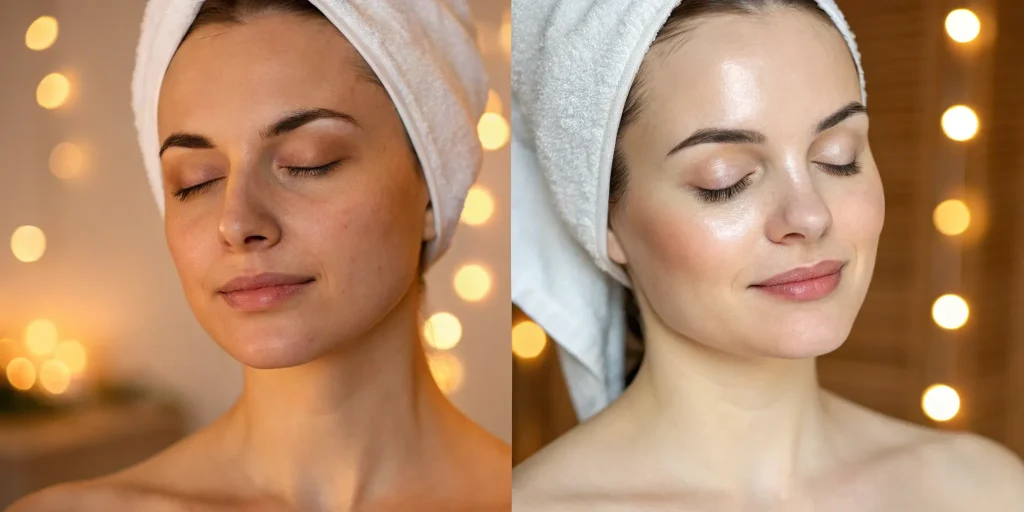
It’s so frustrating when expensive creams and serums don’t deliver the results you want for stubborn acne or fine lines. LED light therapy offers a completely different approach. Instead of just treating the surface, it works from the inside out, using targeted light to eliminate acne-causing bacteria and stimulate new collagen. The amazing red light therapy before and after photos you’ve seen aren’t magic—they’re science. These led light therapy before and after results prove just how effective this technology is for achieving clearer, calmer, and more youthful-looking skin.
Key Takeaways
- Target Your Concerns with Specific Colors: LED therapy is a gentle, non-invasive treatment that uses different wavelengths of light—primarily red to stimulate collagen for anti-aging and blue to eliminate acne-causing bacteria—to address your skin goals at a cellular level.
- Professional Power vs. At-Home Maintenance: For significant and faster results, professional-grade treatments are unmatched. At-home devices are a great way to maintain those results, but consistency is the key to success with either path.
- Smart Prep and Aftercare Are Non-Negotiable: Get the most from every session by starting with clean, product-free skin. Afterward, protect your investment and support your skin’s healing by applying a broad-spectrum sunscreen daily.
So, What Exactly Is LED Light Therapy?
If you’re looking for a skincare treatment that delivers real results without pain or downtime, let me introduce you to LED light therapy. At its core, LED (light-emitting diode) therapy is a gentle, non-invasive treatment that uses different colors of light to improve your skin on a cellular level. Think of it as a relaxing experience where your skin absorbs specific light wavelengths, which in turn kicks natural processes like collagen production and healing into high gear. This technology has become a trusted tool in modern aesthetics for its ability to address a wide range of skin concerns while promoting an overall healthy, vibrant glow.
How It Works on a Cellular Level
Unlike topical products that sit on your skin’s surface, LED light therapy works from the inside out. It uses specific, clinically-proven wavelengths of light that penetrate the skin at varying depths to trigger a response within your cells. Think of it as a personal trainer for your skin cells, giving them the energy and resources they need to repair damage, fight inflammation, and produce the proteins that keep your skin looking firm and youthful. This targeted approach is what allows LED therapy to address concerns like fine lines and acne so effectively, creating visible changes by improving your skin’s fundamental health.
Boosting Cellular Energy (ATP)
At the heart of LED light therapy is its ability to stimulate mitochondria, the tiny powerhouses inside your cells. When exposed to red light wavelengths, mitochondria produce more adenosine triphosphate (ATP), which is essentially the energy currency for all cellular activity. With more ATP, your cells have the fuel they need to function at their best. This energy surge helps them heal, reduce swelling, and ramp up collagen production. More collagen means firmer, plumper skin with fewer visible fine lines and wrinkles, which is why this treatment is a go-to for anyone focused on anti-aging.
Increasing Blood Flow and Circulation
Another key benefit of LED therapy is its effect on your circulatory system. The light energy encourages vasodilation, which is a fancy way of saying it helps widen your blood vessels. This process allows more oxygen-rich blood and vital nutrients to reach your skin cells. According to researchers at Stanford Medicine, improved blood flow is crucial for skin health and cellular repair. Better circulation not only delivers the good stuff but also helps flush out toxins and waste products more efficiently, leaving you with a healthier, more radiant complexion and that coveted natural glow.
What Do the Different Light Colors Do?
The magic of LED therapy lies in its use of different colors. Each color corresponds to a different wavelength of light, which penetrates the skin at a specific depth to trigger a unique response. The two most popular stars of the show are red and blue. Red light therapy is your go-to for anti-aging and healing, as it works deeper to calm inflammation and stimulate collagen. Blue light, however, stays closer to the surface to target and destroy acne-causing bacteria, making it a lifesaver for breakout-prone skin.
Why Wavelengths Matter for Your Skin
To get a little more specific, the “color” is simply how we see the light’s wavelength. Measured in nanometers, these specific wavelengths are chosen to target particular cells and functions within the skin. Red light, for instance, uses longer wavelengths to reach the fibroblasts—your skin’s collagen factories. This is what makes it so effective for firming skin and softening wrinkles. Near-infrared light has an even longer wavelength, allowing it to improve circulation and reduce deeper inflammation. By selecting the right wavelength, we can create a precise treatment for your unique skin goals.
The Clinically Proven Wavelengths for Results
Let’s talk about the science behind the glow. When it comes to anti-aging, red light therapy is the most studied and celebrated wavelength. It works by penetrating your skin to reach the mitochondria, which are the tiny powerhouses inside your cells. The red light gives them a gentle nudge, helping them produce more energy. This extra energy is a game-changer because it fuels your cells to repair damage, reduce inflammation, and kickstart the healing process from within. It’s a bit like giving your skin’s natural rejuvenation system a fresh set of batteries, leading to healthier, more resilient skin over time.
This cellular boost translates into some pretty impressive visible results. Studies have shown that consistent red light therapy can significantly increase collagen density, making your skin feel tighter and look plumper. It’s this increase in collagen that helps soften the appearance of fine lines and gives your skin that youthful bounce. But it’s important to remember that this isn’t an overnight fix. Because the therapy works by supporting your body’s natural rebuilding processes, consistency is everything. Sticking with a regular treatment plan is what allows your skin the time it needs to heal and generate those beautiful, long-lasting results.
What Skin Concerns Can LED Therapy Address?
So, what can you actually use it for? LED therapy is incredibly versatile. It’s a fantastic solution for tackling the visible signs of aging, like fine lines and a loss of firmness. It’s also a game-changer for anyone struggling with acne, as it helps clear blemishes and reduces the associated redness and inflammation. Beyond the face, LED therapy is also used to promote fuller, thicker hair for those experiencing thinning. It’s a powerful standalone treatment and works beautifully to enhance the results of other aesthetic procedures.
Red Light Therapy Before and After: See the Proof
Talking about the science is one thing, but seeing the actual changes is what really matters. LED light therapy delivers visible improvements for some of the most common skin and hair concerns. From calming persistent acne to smoothing fine lines and even encouraging hair growth, the results speak for themselves. Let’s look at what you can realistically expect to see in the mirror.
For Clearing Acne and Calming Inflammation
If you’re tired of battling breakouts and the redness that comes with them, LED therapy offers a gentle but powerful solution. It works in two ways: blue light targets and eliminates acne-causing bacteria living deep within your pores, while red light reduces inflammation and calms irritation. This combination helps clear up existing blemishes and prevents new ones from forming. The result is skin that looks and feels calmer, clearer, and less reactive. It’s a great way to manage acne-prone skin without harsh chemicals or irritating topicals.
Clinical Data on Acne Reduction
The results aren’t just anecdotal; they’re backed by clinical research. For instance, one study found that combining red and blue light therapy reduced acne spots by 77% for swollen, inflamed blemishes and 54% for non-inflamed ones after 12 weeks of consistent sessions. This dual-light approach is particularly effective for treating mild to moderate acne because it tackles both the bacteria and the inflammation at their source. While you’ll likely notice a calmer complexion relatively quickly, it’s important to remember that lasting changes, especially for post-acne marks, develop over several months of regular treatments.
For Smoothing Fine Lines and Wrinkles
One of the most celebrated benefits of red light therapy is its ability to soften the signs of aging. The specific wavelengths of red light penetrate the skin to stimulate collagen and elastin production—the essential proteins that give your skin its youthful firmness and bounce. With consistent treatments, you’ll notice a visible reduction in fine lines and wrinkles. Studies have shown that regular sessions can make skin appear significantly plumper and smoother. Think of it as a workout for your skin cells, helping them rebuild the structure that keeps your complexion looking firm and refreshed.
What the Clinical Studies Show
It’s one thing to see impressive before-and-after photos, but it’s another to have the science to back them up. The good news is that LED therapy isn’t just hype; it’s supported by solid clinical research. For signs of aging, studies have shown that consistent red light therapy can lead to a significant reduction in fine lines. Some research shows a 15–30% decrease in crow’s-feet wrinkles over just 12 weeks. This happens because the light effectively doubles the production of pro-collagen—the building block for firm skin—and increases overall collagen density. For those dealing with acne, the results are just as compelling. One study found that a combination of red and blue light therapy reduced swollen, inflamed acne spots by an incredible 77% over a 12-week period, confirming its power to calm breakouts at the source.
For a More Even Skin Tone and Texture
Are you dealing with sun spots, uneven texture, or a generally dull complexion? Red light therapy can help restore your skin’s natural radiance. By promoting cellular repair and increasing circulation, it helps fade hyperpigmentation and reduce the appearance of sun damage. Over time, treatments can lead to a more even skin tone and a smoother, softer texture. This is how you get that healthy, lit-from-within glow. It works to correct past damage while improving your skin’s overall health, making it more resilient and vibrant.
For Encouraging Fuller, Thicker Hair
LED therapy isn’t just for your face. For those experiencing hair thinning, red light can be a game-changer. The same energy that rejuvenates skin cells can also awaken dormant hair follicles on the scalp, pushing them back into a growth phase. Consistent use has been shown to significantly increase hair count and density, leading to fuller, thicker-looking hair. It’s a non-invasive way to support natural hair growth and improve the overall health of your scalp, making it an effective part of a hair restoration plan.
Evidence for Hair Regrowth
The science behind red light for hair regrowth is grounded in its ability to energize the cells responsible for hair production. When red light penetrates the scalp, it stimulates circulation and awakens dormant hair follicles, essentially encouraging them to re-enter the growth phase. This process can lead to a noticeable increase in both hair count and thickness over time. For many people dealing with female-pattern hair loss or general thinning, consistent treatments offer a non-invasive way to support the scalp’s health and promote a fuller head of hair without harsh chemicals or procedures.
For Body Contouring and Inch Loss
Beyond skin and hair, red light therapy is also making a name for itself in non-invasive body contouring. It works by targeting fat cells and causing them to temporarily open and release their contents, a process known as lipolysis. Your body’s natural lymphatic system then flushes out this released fat. The results can be quite impressive. In one four-week study, participants lost an average of 2.5 inches from their waist and one inch from each thigh. It’s a safe and painless way to target stubborn areas and achieve a more contoured silhouette without any downtime.
How Long Until I See Results?
While some people report a calmer, more radiant look after just one session, the best results are cumulative. Think of it like starting a new fitness routine—consistency is key. For issues like inflammation and redness, you might notice an improvement after just two or three treatments. However, for concerns related to collagen production and hair growth, you’ll want to stick with a regular treatment plan for several weeks to see significant, lasting changes. Patience and consistency will pay off with healthier, more resilient skin and hair over time.
Timeline for Wrinkles and Fine Lines
When you’re targeting fine lines, patience is your best friend. Red light therapy works by encouraging your skin to produce more collagen and elastin—the proteins that create that firm, youthful bounce. While you might notice a subtle plumping effect and a healthy glow after a few sessions, the real magic happens over time. Typically, you can expect to see a visible softening of fine lines and wrinkles after about 8 to 12 weeks of consistent treatments. This is because it takes time for your skin cells to build up that new supportive structure from within, leading to smoother, firmer skin that lasts.
Timeline for Acne and Blemishes
If you’re dealing with acne, you’ll be happy to know that LED therapy can bring relief relatively quickly. Thanks to red light’s anti-inflammatory properties, you may see a reduction in redness and irritation after just a few sessions. The blue light gets to work immediately, targeting and eliminating acne-causing bacteria deep in your pores. For a noticeable clearing of existing blemishes and fewer new breakouts, a consistent treatment plan over 4 to 8 weeks is usually recommended. This two-pronged approach not only calms current flare-ups but also helps create a healthier skin environment to keep future breakouts at bay.
Timeline for Fading Scars
Fading scars and evening out your skin tone is a marathon, not a sprint, but red light therapy is an excellent training partner. By promoting cellular repair and improving circulation, it helps break down pigmentation and heal the skin from past damage, whether from the sun or old breakouts. You might notice your skin looks brighter and more radiant within the first month. However, for significant fading of hyperpigmentation and a visibly smoother texture, you’ll want to commit to a consistent routine for at least 2 to 4 months. Over time, this steady cellular renewal helps restore your skin’s clarity and resilience.
Professional vs. At-Home LED Therapy: Which Is Right for You?
Deciding between professional LED treatments and using an at-home device can feel like a big choice, but it really comes down to your goals, lifestyle, and budget. In-office sessions offer power and precision, while at-home devices provide convenience and consistency. Both paths can lead to healthier, more radiant skin, so let’s break down the differences to help you find the perfect fit.
The Benefits of In-Office Treatments
If you’re looking for noticeable results, fast, a professional setting is your best bet. The equipment used in a medical spa like Novuskin is significantly more powerful than anything you can buy for home use. According to the Cleveland Clinic, these treatments are stronger and more effective, which is why many people see a visible improvement in their skin’s tone and texture after just one session. For targeted concerns like fine lines or acne, a structured series of treatments delivers cumulative benefits, giving you a more dramatic and lasting transformation under the guidance of a trained professional.
Your Guide to At-Home LED Devices
At-home LED masks and wands have become incredibly popular, and for good reason—they bring the treatment to you. The biggest advantage is convenience. You can use them while watching TV or winding down for the night. While they aren’t as potent as in-office versions and tend to produce more subtle improvements, they are excellent for maintaining results between professional appointments or for those just starting to explore light therapy. Plus, they are generally very safe for regular use, as they don’t emit any harmful UV light, making them a low-risk addition to your skincare routine.
Breaking Down the Cost and Long-Term Value
Let’s talk about the investment. Professional treatments have a higher cost per session, but you’re paying for powerful technology and expert application that deliver quicker, more significant results. On the other hand, an at-home device is a one-time purchase that can feel more budget-friendly over the long haul. Some high-quality devices can even be purchased using an HSA or FSA account, which can offer considerable savings. Think of it this way: in-office treatments are an investment in rapid transformation, while at-home devices are an investment in consistent, long-term maintenance.
Typical Costs for At-Home vs. Professional Options
So, what can you expect to pay? For professional treatments, a single session can range from $75 to over $150, depending on the clinic and the specific light being used. For instance, a blue light session for acne might have a different price than a red light session for anti-aging. This pay-per-session model is great for targeting a specific concern with a powerful, supervised treatment. Of course, if you’re part of a membership program like ours at Novuskin, these kinds of services are often rolled into your monthly plan, which makes accessing them regularly much simpler and more cost-effective.
At-home LED tools have a much wider price range. You can find budget-friendly options starting under $50, while more advanced masks from reputable brands can cost up to $500 or more. The price difference usually reflects the device’s power, coverage area, and overall quality. While a one-time purchase can feel more economical over time, you’re trading the potency of a professional machine for the convenience of daily access. The best path depends on your goals—whether you’re seeking a significant transformation or consistent maintenance.
How Often Should You Use LED Therapy?
Consistency is key, no matter which option you choose. For in-office treatments, most people start to see improvements after two or three sessions. To specifically target wrinkles, a common plan involves two to three treatments per week for about four weeks. If you go the at-home route, the commitment is smaller but more frequent. Research has shown that using a red light therapy device for just 10 minutes a day can lead to a noticeable reduction in wrinkles and plumper skin in about eight weeks. Your ideal frequency will depend on your skin’s needs and the results you’re hoping to achieve.
Why More Isn’t Always Better
When you start seeing positive changes from a new treatment, it’s tempting to think that more is better. With LED light therapy, however, that’s not the case. The best results are cumulative, so think of it like a new fitness routine—consistency is what delivers lasting improvement, not intensity. Using a device for longer than the recommended 10 to 20 minutes won’t speed up the process. In fact, overdoing it can sometimes cause skin irritation without providing any extra benefits. The goal is to give your cells a steady, gentle nudge to repair and rejuvenate. Sticking to a regular schedule allows your skin to respond and rebuild over time, leading to the beautiful, long-term results that make this treatment so effective.
How to Get the Most From Your LED Therapy
LED light therapy is a fantastic, low-effort way to improve your skin, but a little preparation and follow-up care can make a world of difference in your results. Think of it like tending to a garden—you need the right conditions for everything to flourish. By following a few simple steps before and after your sessions, you can ensure you’re getting the absolute best outcome from every minute under the light. It’s all about creating a supportive routine that helps the technology work its magic.
Prepping Your Skin Before a Session
For the best results, you’ll want to start with a clean slate. Arrive at your appointment with your skin completely free of makeup, lotions, and sunscreen. These products can create a barrier that blocks the light from penetrating your skin effectively. At home, just use a gentle cleanser to wash your face before your session. It’s also a good idea to hold off on using any harsh exfoliants or active ingredients like retinoids for a few days beforehand to avoid any potential sensitivity. Before you even begin a series of treatments, it’s smart to have a professional diagnose your skin issue to confirm that LED therapy is the right choice for your specific goals.
What to Expect During Your Treatment
If you’re new to LED therapy, you’ll be happy to know it’s one of the most relaxing treatments out there. It’s a completely gentle and non-invasive process, so you won’t feel any pain or discomfort. You’ll simply lie back comfortably while the device works its magic. We’ll provide you with protective eyewear to keep your eyes safe from the bright lights. A typical session lasts about 15 to 20 minutes. Keep in mind that consistency is key; you’ll likely need a series of treatments to see significant, lasting changes. Think of it as a workout for your skin—one session is nice, but a regular routine is what builds strength and resilience.
What to Do After Your LED Session
One of the best parts of LED therapy is that there’s zero downtime. You can head right back to your daily activities as soon as your session is over. However, your skin may be a little more sensitive to sunlight immediately afterward. To protect your fresh results, it’s important to be diligent with sun protection. For the next 48 hours, try to stay out of direct sun and make sure to apply a broad-spectrum sunscreen with an SPF of 30 or higher. Other than that, just stick to your regular gentle skincare routine and keep your skin hydrated with a good moisturizer.
Gentle Post-Treatment Skincare
Your skin doesn’t need a complicated routine after your treatment—just a little extra TLC. The main goals are to keep it hydrated and avoid anything that could cause irritation. Stick with a gentle cleanser and a good moisturizer to support your skin’s healing process and lock in that post-treatment glow. For the next few days, it’s a good idea to press pause on any strong active ingredients. This means holding off on your retinoids, vitamin C serums, and any chemical exfoliants like glycolic or salicylic acid. Giving your skin this short break allows it to fully benefit from the light therapy without any unnecessary stress.
The Best Skincare to Pair with LED Therapy
You can enhance the effects of your LED treatments by using the right skincare products at home. Since different colors of light target different concerns, you can tailor your routine to match your goals. If you’re using red light therapy to address fine lines, pair it with products that support collagen production, like serums with peptides or growth factors. Hyaluronic acid is another great ingredient for adding hydration and plumpness. If you’re using blue light for acne, stick with gentle, non-comedogenic products that won’t clog your pores. The right skincare doesn’t just maintain your results—it actively builds on them.
Is LED Light Therapy Right for You?
One of the best things about LED light therapy is how well it plays with others. It’s a fantastic standalone treatment, but it also complements many other aesthetic services, from medical-grade facials to more intensive procedures. Because it’s so gentle, it can help calm the skin and support the healing process after other treatments. Think of it as the ultimate team player in your skincare routine.
So, how do you know if it’s the right choice for you? Let’s walk through who benefits most from this treatment and a few things to keep in mind before you book a session.
Is It Safe for Sensitive Skin?
If you have sensitive skin or are new to professional treatments, LED therapy is an excellent starting point. It’s a completely non-invasive treatment, which means it works its magic without ever breaking the skin’s surface. There are no needles, no harsh chemicals, and absolutely no downtime required. You can simply relax comfortably under the warm lights knowing the technology is gently stimulating your skin cells to repair and rejuvenate themselves from within. It’s a simple, painless, and effective way to address common skin concerns without causing irritation, making it a perfect introduction to the world of advanced skincare.
Can You Combine LED with Other Treatments?
LED therapy is incredibly versatile and can be used to address a wide range of concerns. It’s highly effective for calming acne breakouts, softening the appearance of fine lines and wrinkles, and promoting the healing of damaged skin. It can also help manage chronic conditions like rosacea, sun damage, and even psoriasis by reducing inflammation and encouraging healthy cellular repair. Because of its powerful supportive benefits, we often recommend pairing LED sessions with other treatments in your plan. This approach helps enhance your overall results, speeds up recovery, and maintains your skin’s health between appointments for a truly comprehensive approach.
Who Should Avoid LED Therapy?
While LED therapy is safe for most people, it isn’t a universal fit. It’s important to skip this treatment if you’re taking any medications that increase your sensitivity to sunlight, such as isotretinoin (formerly known as Accutane) or lithium. You should also avoid it if you have a history of skin cancer or certain inherited eye conditions that could be affected by light exposure. Your health and safety are paramount, which is why the best first step is always a personal consultation. During our chat, we can review your full medical history and make sure this is a safe and effective option for you.
Specific Conditions and Contraindications
Let’s get into the specifics. LED therapy is incredibly versatile and can address a wide range of concerns, from calming acne breakouts to softening fine lines. It’s also a great way to manage chronic conditions like rosacea and sun damage by reducing underlying inflammation. However, it’s not a fit for everyone. You should skip this treatment if you’re taking certain medications that cause photosensitivity, such as isotretinoin or lithium. It’s also best to avoid it if you have a history of skin cancer or certain inherited eye conditions. A professional consultation is the best way to be sure—it gives us a chance to review your medical history and confirm this is a safe, effective choice for your goals.
Your LED Therapy Safety Checklist
Your safety is always the top priority. The good news is that professional LED devices are very safe and don’t use harmful UV light, so there’s no risk of sunburn or long-term skin damage. The treatment itself should feel warm and relaxing—many clients find it to be a peaceful experience. However, it’s always smart to pay attention to how your skin responds afterward. If you ever notice any unusual inflammation, redness, a rash, or pain after a session, you should contact your provider right away. These reactions are rare, but it’s always better to be cautious and keep us in the loop.
Beyond Skincare: Other Potential Benefits
While we love what LED therapy does for our skin, its benefits don’t stop at a glowing complexion. The same technology that stimulates collagen and calms acne works on a fundamental cellular level, which means it can support your body’s healing processes in other ways, too. This is where the line between beauty and wellness really starts to blur. By improving circulation and encouraging cellular repair, light therapy can be a powerful tool for managing discomfort and helping your body recover more efficiently. It’s a holistic approach that supports your overall well-being from the inside out.
Reducing Pain and Inflammation
If you deal with muscle soreness or joint stiffness, red light therapy can offer a welcome sense of relief. The specific wavelengths of red and near-infrared light penetrate deep into the tissue to increase circulation and calm inflammation at the source. This process helps reduce pain and inflammation by delivering more oxygen and nutrients to the affected area, which supports the body’s natural repair mechanisms. It’s a gentle, non-invasive way to manage discomfort from conditions like arthritis or a tough workout, providing relief without relying on medication.
Supporting Wound Healing
The same properties that make red light therapy great for skin rejuvenation also make it a valuable tool for recovery. By stimulating collagen production and increasing blood flow, it can help wounds heal faster and more effectively. This can be particularly useful for speeding up recovery from minor injuries or even post-surgical incisions. While the research is still evolving, early studies show promising results for its ability to support the body’s natural healing process. It’s another example of how this gentle technology can be used to help your body bounce back stronger.
How to Choose the Right LED Therapy for You
Deciding between professional LED therapy and an at-home device comes down to your goals, budget, and lifestyle. Both paths can lead to healthier skin, but they offer very different experiences and results. Professional treatments deliver powerful, targeted results under expert supervision, making them ideal for addressing specific concerns like stubborn acne or visible signs of aging. At-home devices offer convenience and are great for maintenance and subtle improvements. Let’s break down what to look for in each option so you can make a choice that feels right for you and your skin.
Must-Have Features in an At-Home Device
If you’re leaning toward an at-home device for daily maintenance, safety and efficacy should be your top priorities. The most important feature to look for is an “FDA cleared” or “FDA approved” label, which indicates the device has been reviewed for safety and performance. You’ll also want to consider the specific wavelengths offered. Does the device have red light for anti-aging, blue light for acne, or both? Since LED therapy is generally safe for all skin types and colors, a quality device can be a great addition to your routine for maintaining your skin between professional appointments.
What to Look for in a Professional Provider
When you want significant, lasting changes, a professional program is the way to go. In-office treatments use medical-grade technology that is far more powerful than anything you can buy for home use. Look for a provider who offers a comprehensive consultation to assess your skin and create a personalized plan. A great program will include a series of treatments scheduled to achieve your specific goals, whether it’s clearing acne or smoothing wrinkles. The expertise of a licensed aesthetician ensures you get the right wavelengths and treatment duration for maximum impact, delivering stronger and more effective results safely.
How to Pick the Perfect At-Home Device
Beyond FDA clearance, choosing the right at-home device means doing a little homework. Read reviews from trusted sources and look for before-and-after photos from real users. Consider the design—do you prefer a hands-free mask or a portable wand? A mask offers better coverage and convenience, while a wand is great for targeting small areas. Make sure the device is from a reputable brand that provides clear instructions and good customer support. Remember, at-home devices are best for subtle improvements, and consistency is key to seeing any results at all.
Is an At-Home Device Worth the Investment?
Think of LED therapy as an investment in your skin’s long-term health. While professional treatments have a higher upfront cost per session, they deliver more dramatic and reliable results in fewer sessions. At-home devices may seem cheaper initially, but their lower power means you’ll need to use them daily for weeks or months to see even minor changes. Some users report seeing improvements in acne in a few days, while fine lines can take up to two months to soften. A professional plan, especially within a membership model, often provides better long-term value by delivering superior results that you can easily maintain.
Creating Your Personal Treatment Plan
Creating a personal LED therapy plan is all about playing the long game. It’s not a one-and-done treatment but a consistent practice that builds on itself over time. Think of it like a fitness routine for your skin—the more consistent you are, the better and more lasting your results will be. The key is to understand the process, set realistic expectations, and create a schedule that fits your life. This is where you move from simply trying a treatment to building a true self-care ritual.
A well-structured plan ensures you’re getting the right frequency and duration for your specific goals, whether that’s clearing acne, smoothing fine lines, or just achieving an overall healthy glow. It also helps you stay committed when progress feels slow, because you have a roadmap to follow. For many, the initial phase requires more frequent sessions to kickstart cellular repair and collagen production. Then, as your skin adapts and improves, you can transition to a maintenance schedule that sustains your results without being overly demanding. By mapping out your treatment schedule, you’re taking control of your skin’s health and making a smart, long-term investment in yourself. It’s the difference between a temporary fix and a lasting transformation. Here’s how you can build a plan that works for you.
Your First Few Weeks: What to Expect
Patience is your best friend when you start LED therapy. While some people notice a change in acne or skin texture in just a few days, more significant visible results for concerns like fine lines can take several weeks or even a couple of months to appear. In the beginning, you’re building a foundation at a cellular level. Your skin is responding to the light, and that internal repair process takes time. So, don’t get discouraged if you don’t see a dramatic difference overnight. Stick with your routine, because the magic is happening beneath the surface.
How to Maintain Your Long-Term Results
Once you start seeing those beautiful results, you’ll want to keep them. The initial phase of your treatment plan is often more intensive. For example, a typical plan for wrinkles might involve two to three sessions a week for about four weeks. After that, you can shift into a maintenance mode. This might mean scaling back to one session a week or a few times a month. The goal is to find a sustainable rhythm that keeps your skin looking its best. Consistency is what turns a temporary improvement into a lasting change.
How to Track Your Progress
Because the changes from LED therapy can be gradual, tracking your progress is a great way to stay motivated. I always recommend taking a “before” photo in clear, natural light before you start. Then, snap a new picture every week or two under the same lighting conditions. This simple habit helps you see the subtle shifts you might otherwise miss in the mirror. You’ll be able to spot the reduction in redness, the softening of fine lines, or the clearing of breakouts over time. It’s your personal proof that the treatment is working.
Why Consistency Is Key for Lasting Results
Sticking with your LED therapy plan does more than just maintain your initial results—it delivers compounding benefits for your skin’s long-term health. Consistent treatment helps your body produce more collagen, which keeps skin firm and smooth. Beyond aesthetics, red light therapy is known to speed up healing and calm persistent skin problems like rosacea or inflammation. You’re not just treating a symptom; you’re investing in healthier, more resilient skin for years to come. It’s a proactive approach to self-care that pays off beautifully over time.
LED Therapy Safety: What the Experts Say
When you’re trying a new skincare treatment, it’s smart to ask questions about safety. The good news is that LED light therapy has a strong safety record, especially when administered by professionals. Unlike other light-based treatments, it’s a gentle, non-invasive approach that works with your skin’s natural biology. But like any effective therapy, it’s important to follow the right protocols to protect your skin and get the beautiful results you’re looking for. Let’s walk through what the experts recommend for a safe and successful experience.
Understanding the Strength of the Evidence
When you see impressive before-and-after photos, it’s natural to wonder if the results are too good to be true. The scientific community has been studying LED therapy for years, and the evidence is strong for many common concerns. Research shows that red light therapy can make your skin look younger, improve its look and feel, help heal wounds, fade scars, and even help your hair grow. While it’s not a cure-all, the data supports its use for improving skin health and appearance. The key is understanding that the strength of the device and the consistency of the treatment plan are what drive these outcomes, which is why professional-grade technology often delivers more reliable and noticeable results.
What “FDA Cleared” Really Means
You’ll often see at-home devices advertised as “FDA cleared,” but it’s important to know what that label actually means. This designation primarily indicates that the device is considered safe for you to use at home. According to Stanford Medicine, this clearance is about safety, not necessarily a guarantee that the device will work for all of its marketing claims. It’s different from being “FDA approved,” which requires rigorous testing to prove effectiveness for a specific condition. So, while an FDA-cleared device is a safe choice for your skincare routine, it doesn’t mean it has the same power or proven efficacy as the medical-grade equipment used in a professional setting.
The Variability of At-Home Devices
At-home LED masks and wands have become incredibly popular, and for good reason—they bring the treatment to you. The biggest advantage is convenience. However, there’s a trade-off between that convenience and the power of the device. While at-home versions aren’t as potent as their in-office counterparts and tend to produce more subtle improvements, they are excellent for maintaining results between professional appointments. Think of them as a supportive tool in your skincare arsenal. They can help extend the benefits of a professional treatment series but aren’t designed to deliver the same transformative results on their own.
How Lifestyle Factors Influence Your Results
LED therapy doesn’t work in a vacuum. Your daily habits play a huge role in the quality and longevity of your results. Sun exposure, for example, can counteract the collagen-building benefits of red light therapy, so daily sunscreen is non-negotiable. A healthy diet, proper hydration, and a consistent skincare routine all support your skin’s ability to repair and rejuvenate itself. As we often say, consistency is key, no matter which option you choose. By pairing your LED treatments with a healthy lifestyle, you’re creating the best possible environment for your skin to thrive and giving yourself the best chance at achieving lasting results.
Essential Safety Precautions to Follow
One of the most common questions I hear is, “Is this like a tanning bed?” Absolutely not. The key difference is the type of light used. LED therapy uses specific, visible wavelengths of light and does not use damaging UV light. According to the Cleveland Clinic, this means it won’t cause sunburns or long-term skin damage associated with UV exposure. During a professional session, your provider will also give you proper eye protection. While the light is generally safe, your eyes are sensitive, and this simple step ensures you can relax comfortably throughout your treatment without any risk.
Understanding Proper Treatment Protocols
Consistency is everything when it comes to LED therapy. A single session feels great, but the real magic happens with a structured treatment plan. To see significant changes in your skin, you’ll likely need a series of appointments. A typical plan might involve weekly sessions for about a month, followed by less frequent maintenance treatments to keep your skin glowing. This is different from at-home devices, which often require daily use for weeks to achieve noticeable results. Following a professionally recommended schedule ensures your skin gets the right amount of light exposure to stimulate change without overdoing it.
Professional Tips for Safe and Effective Use
Before you jump into LED therapy—especially if you’re thinking about buying an at-home device—I always recommend getting a professional consultation first. A licensed provider can accurately assess your skin concerns, whether it’s acne, fine lines, or pigmentation, and confirm that LED therapy is the right fit for you. This step is crucial because it ensures you’re treating the root cause of the issue effectively. A professional can also create a personalized plan that combines LED with other treatments, helping you reach your goals faster and more safely than going it alone.
How to Check for Quality and Safety Standards
Not all LED devices are created equal. If you decide to purchase an at-home mask or wand, it’s vital to check its credentials. Look for a device that is marked as “FDA cleared” or “FDA approved.” This designation means the U.S. Food and Drug Administration has reviewed the device for safety and effectiveness for its intended use. At a professional med spa like Novuskin, you can rest assured that we only use medical-grade, FDA-cleared technology. This guarantees you’re receiving a treatment that is not only powerful but also meets the highest safety standards in the industry.
Related Articles
- Red light therapy – Novuskin
- Celluma – Novuskin
- Microcurrent non surgical facelift – Novuskin
- 5 Best Skin Tightening Treatments for Face
Frequently Asked Questions
Does LED light therapy hurt or feel hot? Not at all. In fact, it’s one of the most relaxing treatments you can get. You won’t feel any pain, pinching, or intense heat. Most people just feel a gentle, soothing warmth on their skin during the session. It’s a completely non-invasive treatment, so you can simply lie back and relax while the light does its work.
How is this different from the UV light in tanning beds? This is a great question, and the difference is critical. LED therapy uses specific, non-UV wavelengths of light that are beneficial for your skin. Tanning beds, on the other hand, use harmful UV light that causes skin damage and increases the risk of skin cancer.
Can I get LED therapy if I have sensitive skin or a condition like rosacea? Yes, LED therapy is often an excellent choice for sensitive or reactive skin. Because it’s so gentle and doesn’t break the skin’s surface, it can help calm inflammation and reduce redness associated with conditions like rosacea without causing irritation. We always recommend a consultation first to ensure it’s the right fit for your specific skin needs.
How long will my results last? The results are cumulative and last as long as you maintain them. After your initial series of treatments builds up your skin’s collagen and clears concerns, the key is consistency. Think of it like a fitness routine—you can’t go to the gym for one month and expect to stay in shape forever. A maintenance plan with periodic sessions will keep your skin healthy and glowing long-term.
Why should I get professional treatments when I can just buy a mask online? While at-home masks are great for daily maintenance, professional treatments operate on a completely different level. The devices we use in a medical spa are significantly more powerful, delivering stronger wavelengths that produce more noticeable and faster results. You also get the benefit of a personalized plan from a trained professional who ensures you’re getting the most effective and safe treatment for your specific goals.


