


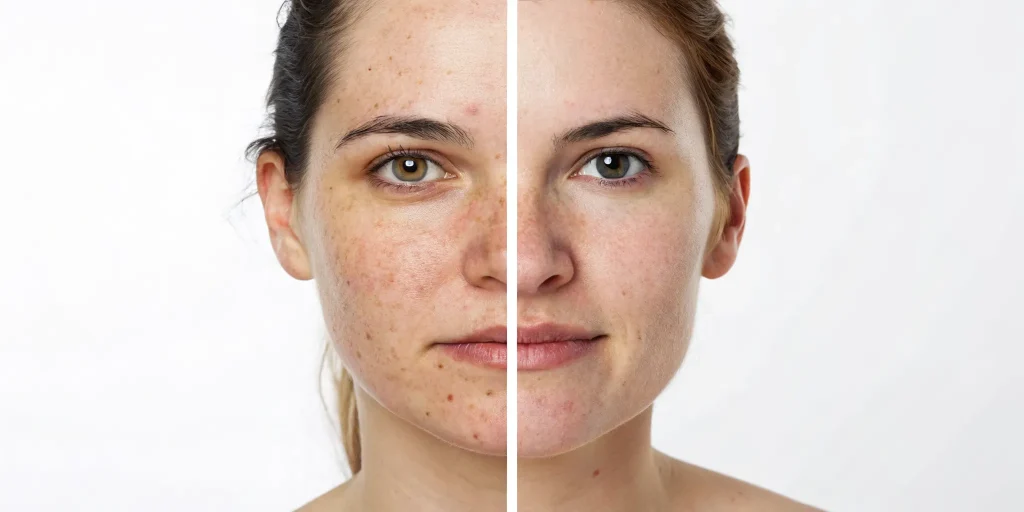
Tired of the endless cycle of concealers and color-correctors for brown spots and redness? While some treatments are too aggressive and others fall flat, an IPL photofacial hits the sweet spot. It uses multiple wavelengths of light to treat a wider range of issues in a single session. This technology is the secret behind those amazing ipl for dark spots before and after photos. The incredible ipl facial before and after results show a dramatic reduction in both pigmentation and redness, all with minimal downtime and a truly rejuvenated look.
Key Takeaways
- IPL photofacials tackle multiple skin concerns at once: This treatment uses broad-spectrum light to effectively reduce sun damage, redness, and uneven tone, making it a great all-in-one solution for color correction.
- A series of sessions delivers the best results: Lasting change comes from consistency. Most people need three to six treatments, spaced a few weeks apart, to gradually break up pigment and achieve a clear, radiant complexion.
- Protect your investment with smart aftercare: Daily sunscreen is the most important step to maintain your results. It prevents new sun damage from forming and keeps your skin looking even and healthy for the long haul.
What Is an IPL Photofacial and How Does It Work?
If you’ve been looking for a way to hit the reset button on your skin without surgery or needles, let me introduce you to the IPL photofacial. IPL stands for Intense Pulsed Light, a technology that uses gentle pulses of broad-spectrum light to address some of the most common skin frustrations. Think of it as a powerful, intelligent camera flash that can target discoloration and signs of aging deep within the skin, leaving the surrounding tissue untouched. It’s a highly effective and popular treatment for rejuvenating your appearance.
The magic happens when the light energy is absorbed by specific cells in your skin. For brown spots (like sun damage or freckles), the pigment, or melanin, absorbs the light. For redness (like rosacea or broken capillaries), the hemoglobin in your blood vessels absorbs it. This light energy converts to heat, which damages the targeted cells. Over the next few days and weeks, your body’s natural healing process clears away these damaged cells, revealing a clearer, more even, and radiant complexion. It’s a fantastic option for anyone wanting to improve their skin’s overall tone and texture with minimal downtime.
How Intense Pulsed Light Targets Skin Imperfections
So, what is actually happening to your skin during an IPL treatment? The technology works on multiple levels to create visible improvements. First, the light energy gently heats the deeper layers of your skin, which helps your body produce more collagen. Since collagen is the protein that keeps your skin firm and smooth, this helps reduce the appearance of fine lines over time.
At the same time, the light specifically targets and breaks up unwanted pigment, effectively fading dark spots and freckles. It also works on redness by collapsing visible blood vessels. As an added benefit, the heat can help shrink enlarged oil glands, which may reduce acne breakouts for some people. It’s a multi-tasking treatment that leaves your skin looking healthier and more balanced.
From Dark Spots to Sun Damage: What Can IPL Treat?
One of the best things about an IPL photofacial is its versatility. It’s not a one-trick pony; it can address a whole range of common skin issues in a single session. If you’re dealing with the lingering effects of sun exposure, this treatment is a game-changer. It’s highly effective at treating sun damage, including age spots, brown spots, and freckles.
IPL is also a go-to treatment for people with persistent redness, including conditions like rosacea and visible broken capillaries around the nose and cheeks. Beyond color correction, it can also help improve skin texture, minimize the appearance of large pores, and soften fine lines. It’s an all-around rejuvenation treatment designed to restore a clear and youthful glow to your skin.
Treating Pigmentation like Melasma and Post-Inflammatory Hyperpigmentation
Stubborn pigmentation can be one of the hardest skin concerns to address. Whether it’s from years of sun worship or the dark marks left behind by acne, uneven tone can stick around for what feels like forever. This is where an IPL photofacial truly shines. The treatment is fantastic for sun spots, brown spots, and freckles that pop up over time. It can also clear up more complex conditions like melasma, which often appears as patchy brown discoloration. The light pulses are absorbed by the excess melanin, breaking it apart so your body can naturally flush it away, leaving you with a much more uniform complexion.
Reducing Redness from Rosacea and Cherry Angiomas
If your primary concern is redness, an IPL photofacial is an excellent solution. It’s incredibly effective at calming the persistent flush of rosacea and minimizing the appearance of broken blood vessels that often gather around the nose and across the cheeks. The technology works to correct skin color problems by targeting the hemoglobin within these visible vessels. The light energy gently heats and collapses the vessel walls, causing them to fade from view. This also works on those little red dots known as cherry angiomas. The result is a calmer, more even-toned complexion without the constant need for color-correcting makeup.
Beyond the Face: Treating the Neck, Chest, and Hands
Sun damage and signs of aging don’t stop at your face, and your treatment plan shouldn’t either. The skin on our neck, chest, and hands is often exposed to the elements just as much as our face, yet it’s frequently overlooked in our skincare routines. An IPL photofacial is versatile enough that it can be used on the face, neck, hands, and chest to address sun spots and uneven texture. Treating these areas helps create a more seamless and consistent appearance, ensuring your skin looks healthy and radiant from head to toe. Many people find that this comprehensive approach gives them a huge boost in confidence.
IPL vs. Laser: Which Treatment Is Right for You?
It’s a common misconception that IPL and laser treatments are the same thing. While both use light-based energy to treat the skin, they operate very differently. The main distinction lies in the type of light they use. A laser emits a single, focused wavelength of light that is highly targeted to one specific concern. Think of it like a laser pointer, zeroing in on one tiny spot.
IPL, on the other hand, uses a broad spectrum of light with multiple wavelengths, much like a camera flash. This allows the treatment to address several skin concerns across a wider area simultaneously. Because of this, IPL is often the preferred choice for treating diffuse redness, widespread sun damage, or general uneven skin tone. Laser treatments are typically better for more specific targets, like removing a single dark spot or a prominent blood vessel.
What to Expect from Your IPL Treatment
Knowing what to expect can make your IPL photofacial experience smooth and exciting. From simple prep work to post-treatment care, each step is designed to give you the best possible results. Let’s walk through the entire process, so you can feel confident and prepared from start to finish.
Getting Ready for Your First IPL Session
Getting ready for your first IPL photofacial is simple and mostly involves protecting your skin from the sun. For at least two weeks before your appointment, you’ll need to avoid direct sun exposure and tanning beds. This is the most important rule, as tanned skin can increase the risk of side effects. You should also stop using any self-tanning products about four weeks prior. Think of it as giving your provider a clean canvas to work with. Finally, be sure to share a list of any medications or supplements you’re taking with your provider, as some can make your skin more sensitive to light. Proper preparation for light-based treatments is key to a safe and effective session.
Pre-Treatment Skincare Recommendations
Beyond just avoiding the sun, you’ll want to make a few tweaks to your daily skincare routine in the week leading up to your appointment. It’s time to press pause on any active ingredients that increase cell turnover or exfoliate your skin. This includes products with retinoids (like retinol or tretinoin), glycolic acid, and salicylic acid. Following these pre-care instructions is crucial because active ingredients can make your skin extra sensitive, and we want to avoid irritation during the treatment. It’s also a good idea to skip things that can thin your blood, like alcohol or fish oil supplements, for about 24 hours beforehand to help minimize any potential bruising. If you’re treating an area with hair, be sure to shave it the day before your session. This simple step helps the light penetrate the skin more effectively, ensuring you get the most out of your photofacial.
What Happens During Your IPL Appointment?
Once you’re settled in for your appointment, your provider will start by thoroughly cleansing your skin. Next, they’ll apply a cool gel to the treatment area, which helps protect your skin and allows the IPL device to glide smoothly. You’ll be given special glasses to shield your eyes from the bright light. Your provider will then place the smooth, glass surface of the IPL device onto your skin and deliver precise pulses of light. Many people describe the sensation as a quick, warm snap, similar to a rubber band flick. The entire process is surprisingly fast, often taking just 15 to 20 minutes depending on the size of the area being treated.
How Long Does an IPL Session Take?
If you’re wondering how to fit an IPL photofacial into your packed schedule, I have great news. The entire process is surprisingly efficient, often taking just **15 to 20 minutes** depending on the size of the area you’re treating. This quick turnaround makes it an ideal “lunchtime treatment” for anyone who wants to see real skin improvements without dedicating half their day to an appointment. It’s one of the reasons why the treatment is so popular here at Novuskin.
For larger areas like the chest or if you’re addressing multiple spots, the session may be a bit longer. In these cases, a treatment can take anywhere from a few minutes to an hour. Either way, the treatment is designed to be highly effective in a short amount of time, allowing you to get back to your routine with almost no interruption. This efficiency, combined with its ability to tackle several concerns at once, is what makes IPL such a standout choice for skin rejuvenation.
What Happens Right After Your IPL Facial?
Immediately after your IPL session, it’s normal for your skin to look and feel like you have a mild sunburn. You might notice some redness, warmth, and minor swelling, which usually subsides within a day or two. One of the most important things to expect is that any brown spots or freckles will temporarily get darker. This is a great sign. These dark spots will look like tiny coffee grounds on your skin’s surface before naturally flaking off over the next one to two weeks. This process reveals the clearer, more even-toned skin underneath. It’s all part of the skin’s natural renewal cycle as it pushes out the pigmented cells.
The “Coffee Ground” Effect and Healing Timeline
Let’s talk about the most interesting part of the healing process: the “coffee ground” effect. After your treatment, you’ll notice that your targeted brown spots and freckles actually get darker for a few days. They’ll look like tiny, peppery specks on your skin’s surface. This might seem alarming at first, but it’s the best sign that the treatment worked perfectly. It means the IPL successfully found and broke up the unwanted pigment. Over the next one to two weeks, these little specks will rise to the surface and naturally flake off. It’s essential to resist the urge to pick or scrub them away; just be gentle with your skin and let your body’s natural renewal process take over. As they disappear, you’ll start to see the clearer, more even-toned complexion underneath.
How to Care for Your Skin After an IPL Facial
Your aftercare routine is your secret weapon for getting gorgeous, long-lasting results. Sun protection is non-negotiable. Your skin will be extra sensitive, so you must avoid direct sun exposure and apply a broad-spectrum sunscreen with SPF 30 or higher every single day. For the first few days, treat your skin gently. Use a mild, non-abrasive cleanser and keep your skin hydrated with a good moisturizer. Most importantly, resist the urge to pick or scratch at any of the darkened spots. Let them flake off on their own to avoid scarring and ensure the best outcome. Following these simple steps will help your skin heal beautifully and protect your investment.
IPL Before and After: What Results Can You Expect?
Okay, let’s talk about the good part: the results. An IPL photofacial is an investment in your skin, and you want to know what kind of return you can expect. While everyone’s skin journey is unique, IPL has a proven track record of creating a clearer, more even, and radiant complexion. The magic doesn’t happen overnight, but with a little patience and the right treatment plan, you can see a significant change in your skin’s health and appearance. It’s all about revealing the beautiful skin that’s been hiding underneath sun damage, redness, or pigmentation.
How Soon Will You See IPL Results?
Patience is key after your first IPL session. You won’t walk out of the clinic with perfect skin, but the process starts immediately. In the days following your treatment, you might notice your dark spots getting even darker, almost like tiny coffee grounds on your skin. This is a great sign. It means the treatment worked, and these pigmented cells are rising to the surface before flaking off naturally. Most people begin to see noticeable improvements in their skin within a few weeks, with the full effect becoming more visible after a couple of months as your skin continues to regenerate.
Can You See a Difference After Just One Session?
Yes, you absolutely can see a difference after just one IPL treatment. While a full series is always recommended for the most dramatic and lasting transformation, many people notice a significant improvement in their skin’s clarity early on. After the initial “coffee ground” spots flake away, you might see a visible reduction in sunspots and less overall redness. In fact, many patients feel more confident as their skin starts to look clearer and healthier. These initial changes, often visible within about a month, are a fantastic preview of what’s to come and can be incredibly motivating as you continue with your treatment plan.
See the Difference: IPL Facial Before and After
One of the best ways to appreciate the power of IPL is by looking at before-and-after photos. These transformations tell the real story. After a series of treatments, you can expect to see a dramatic reduction in sun spots, freckles, and other forms of hyperpigmentation. If you struggle with redness or rosacea, you’ll likely notice a much calmer, more even complexion. The overall effect is brighter, smoother skin that looks refreshed and healthy. Seeing real client results can give you a clear idea of what’s possible and help you visualize your own skin goals.
What Factors Influence Your Final Results?
Your IPL results will be as unique as you are. Several factors play a part in how your skin responds to the treatment. Your skin type and tone, age, and the specific concerns you’re addressing all contribute to the final outcome. For example, IPL is often most effective on lighter skin tones with darker spots because the light can easily target the contrast in pigment. Your lifestyle also matters. Diligent sun protection is non-negotiable for maintaining your results. Understanding the pros and cons of IPL for your specific situation is why a professional consultation is so important for creating a plan that works for you.
The Importance of Skin Type and Provider Skill
This brings us to two of the most critical factors for a successful IPL treatment: your unique skin and the person performing it. While the technology is powerful, it’s not a one-size-fits-all solution. The treatment works by targeting the contrast between pigment and the surrounding skin, which is why IPL is often most effective on lighter skin tones with distinct dark spots. However, that doesn’t mean others can’t get great results. This is where the expertise of your provider becomes absolutely essential. A skilled professional knows how to adjust the device’s settings to safely treat a wide range of skin types. At Novuskin, our providers are highly trained to create personalized treatment plans, ensuring your session is tailored perfectly to you, which minimizes risks and helps you achieve those beautiful before-and-after results.
How Many IPL Sessions Will You Need?
Think of IPL as a series, not a single episode. While one treatment can make a difference, lasting and comprehensive change comes from consistency. Most people need between three and six sessions to achieve their desired results, with each appointment spaced about four to eight weeks apart. This schedule allows your skin to heal and gives the treatment time to work on deeper layers of pigment. Each session builds on the last, gradually breaking up discoloration and redness. This multi-session approach ensures you get the best possible outcome and helps you maintain that beautiful, clear complexion for the long term.
Tailoring the Number of Treatments to Your Goals
The “three to six sessions” guideline is a fantastic starting point, but your journey is uniquely yours. The right number of treatments really depends on your specific goals and your skin’s starting point. For instance, fading a few light sun spots might take fewer sessions than addressing more widespread or stubborn redness from rosacea. This is why a professional consultation is the crucial first step. During your consultation, a provider can analyze your skin, understand what you want to achieve, and create a tailored plan just for you. This ensures you get the most effective results, as each session is designed to build upon the last, gradually revealing clearer and more radiant skin.
Is an IPL Photofacial the Right Choice for You?
Deciding on a new skin treatment can feel like a big step. You’ve probably seen incredible before-and-after photos and heard people rave about their results, but it’s smart to do your homework. An IPL photofacial is a fantastic option for many, but it’s not a universal solution for every skin concern or type. To figure out if it aligns with your goals, it helps to look at the full picture. We’ll walk through the key benefits, what to expect in terms of side effects, clear up some common myths, and explore other treatments that might be a better fit. This way, you can feel confident and informed when making a decision about your skincare journey.
The Top Benefits of an IPL Photofacial
The biggest draw of an IPL photofacial is its ability to tackle multiple skin concerns at once. If you’re dealing with the lingering effects of sun damage, like brown spots or uneven tone, IPL can make a significant difference. It’s also highly effective for reducing redness from conditions like rosacea and minimizing the appearance of broken blood vessels and age spots. The treatment promotes a clearer, more even complexion and can even soften fine lines. Since it’s a non-invasive procedure, there’s virtually no downtime. You might experience some mild redness for a few hours, but you can get right back to your day without a lengthy recovery period.
More Than Skin Deep: A Renewed Sense of Confidence
Beyond the visible improvements, there’s a deeper benefit that comes with clearer skin: a renewed sense of confidence. When you’re not worried about covering up redness or dark spots, you can feel more present and comfortable in your own skin. An IPL photofacial is so effective because it tackles multiple sources of self-consciousness at once—from sun damage to rosacea. Many people find that after a series of treatments, they rely less on makeup and feel more empowered to go bare-faced. This isn’t just about looking better; it’s about feeling like the best version of yourself. The investment in your skin’s health often translates directly into how you carry yourself every day.
Are There Downsides? Potential Side Effects and Risks
It’s important to have realistic expectations about any aesthetic treatment, and IPL is no exception. After a session, it’s common to experience some temporary side effects. You might notice mild redness, a bit of swelling, or a temporary darkening of the pigmented spots that were treated. Think of it as a sign the treatment is working! These effects typically fade within a few hours to a couple of days. Also, keep in mind that an IPL photofacial isn’t a one-and-done fix. To achieve the best and most lasting results, most people need a series of three to six treatments, usually spaced about four weeks apart. This allows your skin to heal and respond between sessions.
Separating IPL Fact from Fiction
A couple of common myths about IPL can cause unnecessary hesitation. First, many people think IPL is the same as a laser treatment. While both use light to treat the skin, they work differently. Lasers use a single, focused wavelength of light, while IPL uses broad-spectrum light, making it versatile for various conditions. Another myth is that the treatment is very painful. Most clients describe the sensation as a quick snap, like a rubber band against the skin. It can be slightly uncomfortable, but it’s generally well-tolerated and over quickly. Understanding the technology helps you know what to truly expect during your appointment.
When Another Treatment Might Be a Better Fit
While IPL is a powerhouse for pigmentation and redness, it might not be the ideal choice for every goal. For example, if your primary concerns are deep wrinkles, significant skin laxity, or certain types of acne scars, other treatments may deliver better results. Options like laser resurfacing can address more advanced texture issues, while microneedling is excellent for stimulating collagen and improving scars. For concerns like unwanted hair, specific laser hair removal treatments are more effective. The best way to find your perfect match is to have a professional consultation. A skincare expert can assess your skin and recommend a personalized plan that might include IPL, another treatment, or a combination of therapies.
Combining IPL with Other Advanced Treatments
Think of your skincare journey like building a dream wardrobe. You wouldn’t just buy one perfect dress and call it a day; you need versatile pieces that work together. The same goes for aesthetic treatments. While an IPL photofacial is fantastic for handling surface-level concerns like redness and sun spots, its true power is often revealed when it’s part of a bigger plan. By strategically combining it with other advanced therapies, you can address a wider range of issues—from skin texture and laxity to deep-set wrinkles. This layered approach allows you to achieve more complete and transformative results, creating a truly personalized path to your best skin ever.
Creating a Comprehensive Plan with Virtue RF or CO2 Lasers
So, what does a combined approach look like in practice? A popular and powerful pairing is an IPL photofacial with Virtue RF Microneedling. Here’s why it works so well: the IPL takes care of the color correction on the surface—fading sun spots and reducing redness—while Virtue RF goes deeper. It uses microneedling combined with radiofrequency energy to stimulate massive collagen production, which helps tighten skin, smooth texture, and soften fine lines. For those seeking more dramatic rejuvenation, combining IPL with a fractional CO2 laser can be a game-changer. The CO2 laser resurfaces the skin to address deep wrinkles and scars, while the IPL cleans up any underlying pigmentation. An expert provider can help you create a comprehensive plan tailored to your unique skin goals.
The Cost of an IPL Photofacial: Is It Worth It?
An IPL photofacial is more than just a treatment; it’s an investment in your skin’s health and your confidence. When you see those incredible before-and-after photos, it’s natural to wonder about the cost and what it takes to maintain that glow. Understanding the full picture of pricing and long-term value helps you make a decision that feels right for you and your goals. Let’s break down what you can expect financially and how to protect your beautiful results for the long haul.
How Much Does an IPL Photofacial Cost?
Let’s talk numbers. The cost of an IPL photofacial can vary, but a single session typically falls between $300 and $600. Because IPL works best as a series of treatments, most people need three to six sessions to see the most significant and lasting improvements. This means a full treatment plan could range from $900 to $3,600. The final price often depends on the size of the area being treated and the specific concerns you want to address. A consultation with a provider will give you a clear and personalized quote based on your unique skin needs.
How a Membership Can Make IPL More Affordable
Paying for each session individually can feel like a big expense. A more manageable approach is a medspa membership, which rolls your treatments into a predictable monthly payment. This model makes it easier to commit to the full series of sessions your skin needs without facing a large bill each time. Think of it as a subscription to great skin. It encourages consistency, which is the key to achieving and maintaining the best possible results. A membership transforms your skincare from a one-off purchase into an ongoing part of your self-care routine, making advanced treatments more accessible and less stressful on your budget.
How to Make Your IPL Results Last
After investing in your IPL treatments, you’ll want to make those gorgeous results last as long as possible. The secret isn’t complicated: it comes down to diligent aftercare and smart daily habits. Sun protection is your number one priority. Daily use of a broad-spectrum sunscreen will shield your skin from the UV damage that caused many of the spots and pigmentation issues in the first place. Beyond sunscreen, sticking to a quality skincare routine will keep your skin healthy and vibrant. With the right care, your IPL results can last for many months, making it a truly worthwhile investment.
The Role of Yearly Maintenance Sessions
After you’ve completed your initial series of treatments and are loving your clear, even skin, the focus shifts to keeping it that way. Think of yearly maintenance sessions as a proactive way to protect your investment. Over time, new sun spots or redness can appear due to continued sun exposure and the natural aging process. A single touch-up session once a year can effectively address these new concerns before they become more noticeable. This approach helps you sustain the beautiful results from your IPL photofacial and keeps your skin looking vibrant and youthful for the long haul. It’s a simple, effective strategy for long-term skin health.
Related Articles
- IPL Photofacial Treatment: Benefits, Cost & Results | Novuskin
- Intense Pulsed Light (IPL) for Sun Spots: Your Guide
Frequently Asked Questions
Does an IPL photofacial hurt? Most people find the treatment very manageable. The sensation is often described as a quick, warm snap, similar to a rubber band flicking against your skin. Your provider will apply a cooling gel to the area beforehand, which helps keep you comfortable. The good news is that each pulse of light is very fast, and the entire session is typically over in less than 20 minutes.
How long will my IPL results last? With proper care, your results can last for a year or even longer. The key to maintaining that clear, even complexion is protecting your skin from new sun damage. Think of sunscreen as your insurance policy for your results. Daily use of a broad-spectrum SPF 30 or higher will help prevent new spots and redness from forming, keeping your skin looking its best for the long haul.
Why do my brown spots look darker after the treatment? Seeing your spots darken right after an IPL session is actually a great sign. It means the treatment successfully targeted the unwanted pigment. These darkened spots, which can look like tiny coffee grounds, are the treated pigment cells rising to the surface of your skin. They will naturally flake off on their own within one to two weeks, revealing the clearer, healthier skin underneath.
Can I get an IPL photofacial if I have a darker skin tone? IPL is generally most effective and safest for individuals with lighter skin tones. The technology works by targeting the contrast between dark pigment and the surrounding skin. On darker skin tones, there is less contrast, which can increase the risk of side effects like discoloration. A professional consultation is the best way to determine if you are a good candidate or if another treatment would be a safer and more effective option for your specific skin type.
Can I wear makeup right after my session? It’s best to let your skin breathe and recover for at least 24 hours after your treatment. Your skin will be a bit sensitive, similar to a mild sunburn, and keeping it clean and free of makeup will help the healing process. When you do start wearing makeup again, you might consider using a mineral-based formula, as it tends to be gentler on post-procedure skin.


