


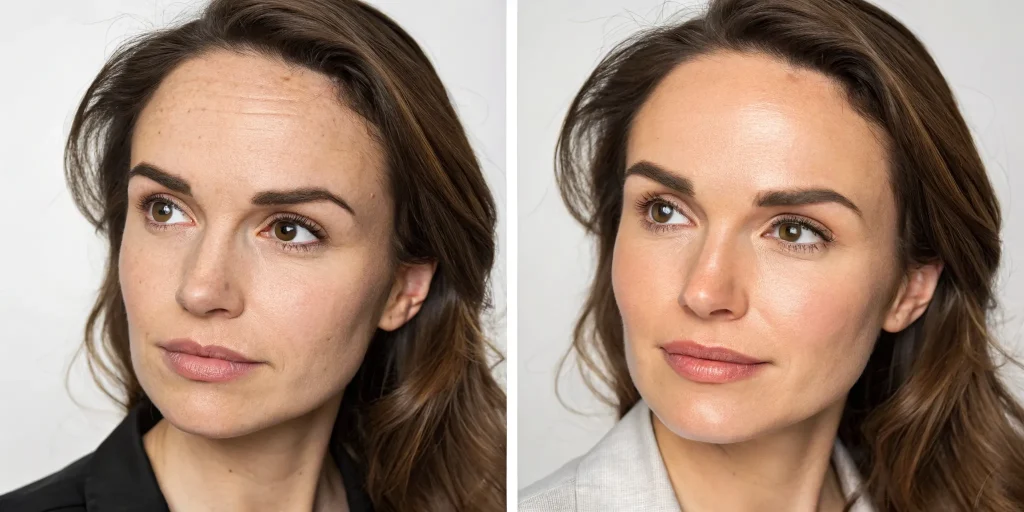
When you see those stunning botox before and after forehead pictures, you’re seeing more than just a product at work—you’re seeing artistry. The single most important factor for a natural-looking result is the experience of your injector. A great forehead botox treatment is all about balance. The right provider understands facial anatomy, ensuring you look refreshed and relaxed, not rigid. Think of it as an investment in your safety and confidence. This guide gives you the essential questions to ask and the credentials to look for, helping you confidently choose a provider you trust.
Key Takeaways
- It’s a Muscle Relaxer, Not a Filler: Botox smooths forehead lines by temporarily relaxing the specific muscles that cause them. This process allows the overlying skin to soften, reducing the appearance of wrinkles caused by expressions.
- Results Take Time and Consistency: You’ll start to see changes in a few days, but the full, smooth effect takes about two weeks to appear. To keep your results looking fresh, plan on scheduling follow-up treatments every three to four months.
- Your Provider’s Skill Determines Your Outcome: The most critical factor for a safe and natural-looking result is the expertise of your injector. Choosing a qualified medical professional who understands facial anatomy ensures your treatment is tailored perfectly to you.
How Does Botox Smooth Forehead Wrinkles?
If you’ve ever looked in the mirror and wondered where those horizontal forehead lines came from, you’re not alone. These lines are often the first signs of aging we notice, created by years of expressing ourselves, whether we’re surprised, focused, or concerned. The secret to smoothing them out isn’t about erasing your expressions, but about softening their impact on your skin. This is where Botox comes in, offering a precise and effective solution.
Botox is a highly trusted treatment designed to relax the specific muscles responsible for creating these wrinkles. Think of it less like a filler that plumps the skin and more like a peacemaker that tells an overworked muscle to take a well-deserved break. When the muscle relaxes, the overlying skin gets a chance to smooth out, reducing the appearance of existing lines and even preventing new ones from forming. It’s a targeted approach that addresses the root cause of what are known as “dynamic wrinkles.” Understanding the science behind it can demystify the process and help you see why it’s such a popular choice for achieving a refreshed, natural-looking appearance. Let’s get into the specifics of how it all works.
What’s Actually in the Injection?
So, what exactly is in that tiny needle? Botox is the brand name for a purified protein derived from Botulinum toxin. While the word “toxin” might sound intimidating, it’s important to know that the substance used in cosmetic treatments is a highly refined, medical-grade product administered in very small, controlled doses. It has been used safely in medicine for decades to treat a variety of conditions, from muscle spasms to chronic migraines. For cosmetic purposes, it’s a medical treatment that uses this special purified substance to temporarily smooth out facial wrinkles and lines. Think of it as a specialized tool that, in the hands of a skilled professional, works with incredible precision.
Different Types of Botulinum Toxin
While “Botox” has become the go-to term, it’s actually a brand name for a specific type of botulinum toxin—think of it like calling all tissues “Kleenex.” Botox is part of a family of similar FDA-approved treatments called neuromodulators. You might also hear about Dysport, Xeomin, and Jeuveau. They are all different brands of Botulinum toxin type A, the most common type used for cosmetic purposes. They all share the same goal of relaxing the muscles that cause wrinkles, but their unique formulations mean they can differ slightly. For instance, one might start working a day sooner, while another might diffuse differently under the skin. An experienced provider will know the nuances of each and can recommend the best option based on your unique facial anatomy and desired results.
Why Do We Get Forehead Lines Anyway?
Those lines across your forehead don’t just show up overnight. They are often caused by years of repeated facial expressions that contract the frontalis muscle, the large muscle that allows you to raise your eyebrows. Every time you show surprise, concern, or even focus intently, this muscle pulls the skin up, creating temporary folds. Over time, as our skin loses some of its natural elasticity, these temporary folds can settle in and become permanent fixtures, visible even when your face is at rest. These are known as dynamic wrinkles because they’re tied directly to muscle movement. Botox is so effective because it specifically targets this muscle activity, addressing the problem right at the source.
How Botox Tells Your Muscles to Relax
Here’s where the magic happens. Botox smooths forehead lines by temporarily relaxing the muscles that cause them. It’s a muscle relaxer, not a filler. When injected, the purified protein works to block nerve signals to the targeted muscles. Essentially, it interrupts the conversation between your nerves and your frontalis muscle, telling it not to contract. With the muscle no longer pulling on the skin, the surface is able to relax and smooth out. This is why you’ll see a dramatic reduction in lines when you try to raise your eyebrows after treatment. The effect is temporary, typically lasting three to four months, as your body naturally processes the product and restores nerve function.
What to Look for in Forehead Botox Before and Afters
Scrolling through before and after photos can be incredibly helpful, but it’s important to know what you’re looking at. It’s easy to get lost in the images without understanding the subtle details that signal a great result. The goal of forehead Botox isn’t to create a completely frozen, expressionless face that gives away your secret. Instead, a successful treatment should leave you looking refreshed, relaxed, and authentically you. The best results soften deep-set lines while still allowing you to raise your eyebrows in surprise or furrow them in thought. When you analyze photos, pay attention to how the skin looks both at rest and during expression. A great outcome means the horizontal forehead lines and vertical “11s” between the brows are significantly reduced, creating a smoother canvas without looking stiff or unnatural. It’s all about finding that perfect balance where you look like the best version of yourself, just with fewer distracting wrinkles. Understanding what to look for, when to expect changes, and why results vary will help you set realistic expectations and appreciate the artistry behind a well-done treatment. Let’s break down how to become an expert at reading these photos.
Spotting a Great Botox Result
When you’re looking at before and afters, the first thing to notice is the reduction of lines when the face is at rest. The “before” photo might show faint or deep horizontal lines even when the person isn’t raising their eyebrows. In the “after” photo, those lines should be much softer or gone completely. Next, look for a subtle, natural arch in the brows, which indicates a skilled injection technique. A heavy or dropped brow can be a sign of improper placement. The best Botox treatments smooth wrinkles while preserving your ability to make normal facial expressions, so you still look like you.
When Will You See Your Botox Results?
Patience is key when it comes to Botox. You won’t walk out of your appointment with immediate results. You’ll likely start to see the initial effects within three to five days as the muscles gradually relax. The full, final result typically appears around two weeks after your treatment. This is when you’ll see the maximum smoothing effect on your forehead lines. These beautiful, smooth results generally last for about three to four months. As the effects wear off, you’ll notice muscle movement slowly returning, and your lines will begin to reappear. This is a good indicator that it’s time to schedule your next appointment to maintain your look.
Why Your Results Might Look Different
You might notice that your results look different from a friend’s, and that’s completely normal. The final outcome depends on several factors, including your unique muscle anatomy, the strength of your forehead muscles, your metabolism, and the dosage used. The most critical factor, however, is the skill of your injector. An experienced provider knows exactly where to place the injections and how much product to use to achieve a natural, refreshed look instead of a “frozen” one. This is why you’ll see a variety of BOTOX® Cosmetic before and after photos online; each treatment is tailored to the individual’s face and goals.
What Results Can You Realistically Expect?
When you’re considering forehead Botox, it’s important to have a clear picture of what the treatment can and can’t do. Setting realistic expectations is the first step toward being happy with your results. From dispelling common myths to understanding what influences your final look, here’s what you should know.
How Effective Is Botox? A Look at the Numbers
While impressive photos tell part of the story, the clinical data offers real confidence. So, how well does Botox actually work? The numbers are pretty convincing. In clinical studies on forehead lines, between 46% and 61% of adults saw a significant improvement within 30 days. The results are even more striking for frown lines—those vertical “11s” between the brows. The same studies found that a remarkable 80% of adults experienced a major improvement in their frown lines, with nearly 90% seeing at least some positive change. These figures confirm that Botox is a highly reliable treatment for smoothing the most common expression lines, delivering visible results for the majority of people.
Forehead Botox Myths We Need to Bust
Let’s tackle the biggest fear head-on: looking “frozen.” The goal of forehead Botox isn’t to erase your ability to express yourself. It’s about softening the lines that form when you raise your eyebrows or concentrate. A skilled injector aims for a refreshed, natural look, ensuring you can still show surprise, happiness, and all your other emotions. Think of it as smoothing the canvas, not painting over it. The idea is for friends to say you look well-rested, not to ask what you’ve had done. Modern treatments focus on relaxing the muscles just enough to prevent deep wrinkles from setting in while keeping your natural facial expressions intact.
How Long Will Your Results Last?
It’s helpful to think of Botox as part of your ongoing skincare routine rather than a one-time fix. Typically, the smoothing effects of forehead Botox last for about three to four months. As your body naturally metabolizes the product, you’ll notice muscle movement gradually returning, and those expression lines will slowly reappear as they were before. This is completely normal. To maintain your results, you’ll want to schedule follow-up appointments every few months. Consistency is key to preventing deeper, static wrinkles from forming over time, making it a proactive step in your anti-aging strategy.
First-Time Treatments vs. Follow-Up Appointments
Think of your first Botox treatment as the starting point for a new routine. During this initial visit, your provider is getting to know your unique facial anatomy and muscle strength. They will carefully assess how your muscles move to create a custom treatment plan tailored just for you. It’s a collaborative process to find the perfect dose that will smooth your lines while preserving natural expression. Because everyone’s anatomy is different, this first step is crucial for achieving a beautiful result. Many providers will schedule a two-week follow-up after your first injection to check on your results and make any minor adjustments needed. This ensures your outcome is exactly what you hoped for and sets the foundation for future appointments.
Once you’ve achieved your ideal result, maintenance is straightforward. Follow-up appointments are typically scheduled every three to four months to keep your forehead smooth and prevent lines from returning. Consistency is the key to long-term success. By staying on schedule, you’re not just treating existing wrinkles; you’re proactively managing how your skin ages. Over time, some people find their muscles become trained to relax, which can help soften lines even between treatments. This is why viewing Botox as an ongoing part of your self-care regimen, much like a facial or skincare routine, helps you maintain a refreshed and confident look year-round.
What Affects Your Botox Results?
Your results are not just about the product; they’re about the artist holding the brush. The single most important factor in achieving a beautiful, natural outcome is the skill of your injector. An experienced provider has a deep understanding of facial anatomy, which is critical for placing injections precisely. The forehead muscle, known as the frontalis, is particularly tricky. Incorrect placement can lead to an uneven or heavy-feeling brow. A great injector will customize the treatment to your unique muscle patterns, ensuring a balanced and symmetrical result that complements your features perfectly. This expertise is what separates a great result from a questionable one.
Can Botox Impact Your Skin’s Health?
It’s a great question, and the answer is mostly indirect. Botox doesn’t change your skin’s texture or composition, but it does give it a much-needed break. By relaxing the underlying muscles, it stops the constant creasing and folding that leads to wrinkles, allowing the skin’s surface to soften and smooth out. Some studies even suggest that Botox can have an indirect effect on the skin’s oil glands, which can be a welcome bonus if you deal with an oily T-zone. While the treatment is generally considered safe, it’s still a medical procedure. Potential side effects are rare but possible, and it’s wise to be aware of the considerations for long-term use. This is another reason why choosing an experienced, qualified injector is non-negotiable—they ensure your treatment is both effective and administered with the highest standard of care.
Your Forehead Botox Appointment: A Step-by-Step Guide
Feeling ready for smoother skin but a little nervous about the appointment itself? That’s completely normal. Knowing exactly what to expect can turn any apprehension into pure excitement. The entire process, from prep to post-treatment, is surprisingly simple and designed to be as comfortable as possible. Think of it as a quick, effective refresh in your day. We’ll walk through each step together, so you can feel confident and prepared when you walk into the treatment room.
How to Prep for Your Treatment
This part is all about setting yourself up for the best possible results. A week before your appointment, it’s a good idea to pause any blood-thinning medications and supplements like aspirin, ibuprofen, fish oil, and Vitamin E to help minimize bruising. You’ll also want to skip alcohol for at least 24 hours beforehand. On the day of your treatment, just come as you are with a clean, makeup-free face. This gives your provider a perfect canvas to work with and ensures the treatment area is ready for the injections. It’s that simple!
Disclosing Your Treatment History
Think of your consultation as a friendly conversation, not an interrogation. Being open about any previous Botox or filler treatments is one of the most important things you can do to ensure a great result. Your injector needs to know what products you’ve had, when you had them, and whether you were happy with the outcome. This information isn’t about judgment; it’s about creating a personalized plan that works for you. It helps your provider understand how your muscles respond and what dosage works best for your anatomy. By sharing your history, you empower your injector to tailor the treatment to your specific needs and avoid any unwanted effects, ensuring your results look fresh and natural.
What Happens During the Injections?
This is the part that goes by much faster than you’d think. The actual injections usually take just 10 to 15 minutes. After a quick chat to confirm your goals, your provider will carefully map out the injection sites on your forehead. They’ll then use a very fine needle to administer the Botox into the targeted muscles. Most people describe the sensation as a tiny, quick pinch that’s over in a second. A trained professional knows exactly where to place the injections for a natural, smooth look that still lets you show expression. Before you know it, you’ll be all done.
Managing Comfort During the Procedure
Your comfort is a top priority, and there are several simple ways to make the experience as pleasant as possible. While the injections themselves feel like a quick, tiny pinch, your provider can apply a topical numbing cream or use an ice pack on the area beforehand to minimize any sensation. Some clinics even use a small vibrating device to distract the nerves, which works wonders. It’s also worth remembering that preparation helps, too. Following the pre-treatment advice to avoid blood thinners can reduce the chance of bruising, which adds to your overall comfort after the appointment. The entire process is designed to be quick and manageable, and your provider will make sure you feel at ease from start to finish. After the procedure, you’ll be advised on simple aftercare steps, like avoiding strenuous exercise for 24 hours, to ensure a smooth recovery.
Right After Your Appointment: Immediate Aftercare
Your work is done, but a little aftercare goes a long way in ensuring your results are flawless. For the first 24 hours, the main rule is to be gentle with the treated area. That means no rubbing, massaging, or facials. Try to stay upright for the first four hours after your appointment to let the Botox settle into place properly. It’s also best to skip any strenuous exercise for the rest of the day. Following these simple guidelines helps the product work exactly where it’s supposed to, leading to that smooth, refreshed look you’re after.
Are There Any Side Effects or Risks?
It’s smart to be informed about any cosmetic treatment, and Botox is no exception. While it has a long-standing safety record, knowing what to expect can help you feel confident and prepared. The good news is that significant side effects are rare, especially when you’re in the hands of a skilled professional. Most of what you might experience is minor and temporary, resolving on its own within a few days.
The key to a safe and successful treatment is choosing a provider who truly understands facial anatomy and has a track record of delivering natural-looking results. This decision is the single most important factor in minimizing risks and ensuring you love your look. An expert injector knows exactly how to relax the right muscles to smooth lines while keeping your natural expressions intact. Let’s walk through the common, temporary side effects and discuss how to make sure your experience is a great one.
What’s Normal? Common Side Effects
Right after your appointment, you might notice a few small, raised bumps at the injection sites, similar to mosquito bites. This is a completely normal reaction and usually disappears within an hour. Some people also experience mild bruising, swelling, or a slight headache. These effects are common and typically resolve on their own within a day or two. Think of it as your skin adjusting to the treatment. Most clients find these side effects are minimal and don’t interfere with their daily activities, allowing them to return to their routine almost immediately.
Bruising, Swelling, and Headaches
Let’s talk about the most common concerns: bruising, swelling, and headaches. It’s completely normal to see some minor, temporary reactions as your skin settles after the treatment. You might notice small, raised bumps at the injection sites, which often look like tiny mosquito bites but typically fade within an hour. Some people also experience mild bruising or swelling, which is why following pre-care instructions, like avoiding blood thinners, is so helpful. A slight headache can also occur, but it usually resolves within a day or two. These effects are generally minimal and shouldn’t stop you from going about your day. Following proper aftercare will help everything clear up quickly.
Flu-Like Symptoms and Other Minor Reactions
While less common, some people report experiencing mild, flu-like symptoms after their treatment. This is a temporary response from your body and usually passes within a day. Other rare side effects can include temporary eyelid drooping or slight asymmetry in your eyebrows. It’s important to know that these issues are almost always linked to the injector’s technique. This is why choosing a highly skilled and experienced provider is non-negotiable. A true professional understands the intricate risks and has the anatomical knowledge to place each injection precisely, ensuring your results are both beautiful and safe.
Understanding the Rarer Risks
While serious complications are uncommon, it’s important to be aware of them. If Botox is not injected with precision, it can sometimes lead to unintended results like uneven brows or a temporary drooping of an eyelid or eyebrow. This happens when the product migrates to a nearby muscle. Another concern some people have is ending up with a “frozen” or expressionless look. These outcomes are not typical and are almost always related to the injector’s technique and experience. A skilled provider knows how to achieve a smooth, refreshed appearance while preserving your natural expressions.
Unwanted Results: Eyelid Droop and “Spock” Brows
While serious issues are rare, it’s worth knowing about potential aesthetic hiccups. If Botox isn’t placed with absolute precision, it can sometimes migrate to a neighboring muscle, leading to a temporary droop in an eyelid or an overly arched, “Spock-like” brow. Another common concern is the “frozen” look, where the face appears stiff and expressionless. It’s important to know that these results are not the norm and are almost always tied to the injector’s experience and technique. A highly skilled provider understands the nuances of your facial anatomy, ensuring they relax the right muscles just enough to smooth lines while keeping your natural expressions beautifully intact.
Serious Complications from Toxin Spread
In very rare cases, the effects of the botulinum toxin can spread to other parts of the body hours, days, or even weeks after an injection. According to the Mayo Clinic, you should contact your doctor immediately if you experience muscle weakness, vision problems, trouble speaking or swallowing, breathing difficulties, or a loss of bladder control. While these complications are highly unlikely, being aware of the signs is part of making an informed and safe decision. Choosing a qualified medical professional for your treatment is the most critical step in minimizing risks and ensuring a safe experience.
Choose Your Injector Wisely to Stay Safe
The best way to ensure a safe treatment and beautiful results is to choose a trained and qualified medical professional. An experienced injector has a deep understanding of facial anatomy and can place the Botox precisely where it’s needed to smooth wrinkles without affecting your ability to show emotion. During your consultation, ask about their credentials, experience, and approach to treatment. A great provider will listen to your goals and aim for a natural, refreshed look that makes you feel like the best version of yourself.
Your Forehead Botox Aftercare Plan
Getting the best results from your Botox treatment doesn’t stop when you leave the spa. Your aftercare routine is key to ensuring a smooth recovery and achieving that flawless, natural-looking finish. Think of it as protecting your investment. By following a few simple guidelines, you can minimize the risk of bruising, prevent the product from shifting, and help your results settle in beautifully. This plan will walk you through exactly what to do (and what to skip) to make sure you love your look for months to come.
The First 24 Hours: What to Do (and Not Do)
The first day after your appointment is the most critical. Your main goal is to let the Botox settle into the targeted muscles without any interference. The most important rule? Keep your head up. Try to stay upright for at least four hours after your treatment, which means no napping or lying down. This simple step prevents the Botox from migrating to unintended areas. You should also adopt a strict hands-off policy for the next 24 hours. Avoid rubbing, massaging, or putting any pressure on your forehead. This includes skipping hats, headbands, or facials. A little patience now will ensure the product works exactly where it’s supposed to.
What to Avoid After Your Treatment
To minimize bruising and swelling, it’s best to pause certain activities and products around your appointment. For 24 hours before and after your treatment, skip alcohol and strenuous exercise. Anything that increases blood flow to your face, like a hot yoga class or a sauna session, can interfere with your results. You’ll also want to be gentle with your skincare routine. Avoid using harsh products like retinols, exfoliating acids, or scrubs on the treated area for a couple of days. It’s also a good idea to check with your provider about any medications or supplements you take, as blood thinners like aspirin, ibuprofen, and even fish oil can increase the likelihood of bruising.
Pro Tips for the Best Possible Results
Ready for a seamless recovery? Staying hydrated and eating nutritious foods can support your skin’s healing process. If you notice any minor bruising or swelling, a cool compress can offer some relief. Remember, Botox results aren’t instant. You’ll start to see a change within a few days, with the full effect appearing in about two weeks. The best way to maintain your smooth forehead is to stay consistent. Scheduling your next appointment before the effects completely wear off (usually every 3 to 4 months) helps train the muscles to stay relaxed. This makes our anti-aging injections a perfect fit for a long-term beauty and wellness plan.
How to Choose the Right Provider for Forehead Botox
Finding the right person to administer your Botox is the single most important step in your journey. The quality of your results, your safety, and your overall experience depend entirely on the skill of your injector. A great provider delivers natural-looking smoothness, while an inexperienced one can leave you with a “frozen” or unnatural appearance. Think of it as choosing an artist. You want someone with a deep understanding of facial anatomy, a steady hand, and an eye for balance. This isn’t the time to look for the cheapest deal; it’s an investment in your face and your confidence. Taking the time to research and select a qualified professional ensures you’ll love what you see in the mirror.
What to Look for in an Injector
When you start your search, focus on licensed medical professionals. This includes doctors, physician assistants, and registered nurses who have specific training in cosmetic injectables. Don’t hesitate to ask about their qualifications and how long they’ve been administering Botox. An experienced injector understands the subtle nuances of facial muscles, which is crucial for achieving results that look refreshed, not rigid. They can tailor the treatment to your unique facial structure, ensuring you can still express yourself naturally. You can often verify a provider’s credentials through state licensing boards or professional organizations like the American Society of Plastic Surgeons.
Questions to Ask During Your Consultation
Your consultation is your opportunity to interview your potential provider and make sure you feel comfortable. A good injector will welcome your questions and take the time to understand your goals. Come prepared with a list of things you want to know. You might ask: “How many forehead Botox treatments do you perform each month?” or “Can I see before-and-after photos of your actual patients?” This is also the time to discuss your medical history and desired outcome. A personalized treatment plan is a sign of a thorough and professional provider. If you feel rushed or dismissed, that’s a clear sign to book a consultation elsewhere.
How Much Does Forehead Botox Cost?
Botox is typically priced per unit, and the total cost of your treatment will depend on how many units you need to achieve your goals. The number of units can vary based on the strength of your forehead muscles and the extent of your wrinkles. During your consultation, your provider should give you a clear breakdown of the expected cost. Be wary of prices that seem too good to be true, as they might reflect a diluted product or an inexperienced injector. It’s helpful to view this as an investment in yourself. At Novuskin, our membership model makes high-quality treatments more accessible by bundling them into a predictable monthly plan.
Breaking Down the Cost: Price Per Unit
When you see Botox advertised, you’ll almost always see the price listed “per unit.” A unit is simply a measure of the amount of Botox used. The total cost of your treatment is calculated by multiplying the price per unit by the number of units you need. This number isn’t one-size-fits-all; it’s tailored to you. Factors like the strength of your forehead muscles, the depth of your wrinkles, and your specific aesthetic goals all play a role in determining the right dosage. A personalized consultation is where a skilled provider will assess your facial anatomy and recommend the precise number of units needed to give you a smooth, natural-looking result.
How Many Units Will You Need?
So, how many units are we talking about for the forehead? While a personal consultation is the only way to know for sure, we can look at some general guidelines. For treating the horizontal lines across the forehead, injectors typically use between 15 and 30 units. Allergan, the company that makes BOTOX® Cosmetic, suggests 20 units for this area, often administered as four units in five different spots. If you’re also treating the “11” lines between your brows, you’ll need additional units. An experienced provider will determine the exact amount needed to relax your muscles effectively while maintaining a natural look.
A Note on Tipping
This is a question that comes up all the time: should you tip for Botox? The short answer is no. Because Botox is a medical procedure administered by a licensed medical professional, like a doctor or registered nurse, tipping is not expected or required. Think of it like an appointment with your dermatologist rather than a service like a massage or a haircut. While the gesture is always appreciated, it’s not part of the standard etiquette in a medical setting. Your payment for the treatment itself covers the provider’s expertise and the product used, so you can put your wallet away after you’ve paid the bill.
Is Forehead Botox Right for You?
Deciding to get Botox is a personal choice, and it’s all about what makes you feel confident. If you’re bothered by the lines that appear when you raise your eyebrows or frown, Botox could be a fantastic solution. But it’s important to have clear goals and understand what the treatment can and can’t do. Thinking about who makes a good candidate, what other options exist, and how it fits into your long-term routine will help you make a decision you feel great about.
Are You a Good Candidate for Botox?
The best candidates for forehead Botox are those looking to soften dynamic wrinkles, which are the lines caused by muscle movements like squinting or raising your brows. Botox works by temporarily relaxing these specific muscles, creating a smoother appearance. The goal isn’t to erase all expression; it’s to achieve a refreshed, natural look where you can still show emotion. If you’re in good health and have realistic expectations, you’re likely a great fit. The most important step is finding a skilled injector who understands facial anatomy and can tailor the treatment to your unique features.
Who Should Avoid Botox?
While Botox is a safe and effective treatment for many, it’s not the right choice for everyone. Your safety is always the top priority, so there are a few situations where it’s best to wait or avoid the treatment altogether. For example, Botox is generally not recommended if you are pregnant or breastfeeding. This is a standard precaution, as there isn’t enough research to confirm its safety for the baby. You should also postpone your appointment if you have a skin infection in the treatment area to prevent any complications. A thorough consultation is the perfect time to discuss your full medical history and ensure you’re a great candidate.
Considerations for Autoimmune and Mental Health Conditions
It’s essential to be open about your health history, especially concerning certain underlying conditions. Individuals with specific muscle or nerve disorders, such as ALS or myasthenia gravis, should avoid Botox as it can interfere with their condition. Similarly, your mental and emotional well-being is a key part of the conversation. For those with body dysmorphic disorder, a condition involving an obsessive focus on perceived flaws, cosmetic treatments may not provide the desired satisfaction. A responsible provider will always prioritize your overall health, ensuring that any treatment is a positive step for both your physical appearance and your mental confidence.
What Are the Alternatives to Botox?
Botox is a muscle relaxer, but it’s not the only tool for tackling forehead lines. If you have static wrinkles, which are lines that are visible even when your face is at rest, dermal fillers might be a better option. Fillers work by adding volume to plump up the skin from underneath. For concerns like skin texture, tone, or sun damage, treatments like chemical peels or laser resurfacing could be more effective. A thorough consultation with a provider will help you explore all the cosmetic procedures available and create a plan that addresses your specific concerns.
Fitting Botox into Your Skincare Routine
Think of Botox as part of an ongoing skincare strategy, not a one-time fix. To maintain your smooth results, you’ll need follow-up treatments every three to four months. The good news is that with consistent treatments, some people find their results last a bit longer over time. To prepare, it’s best to avoid alcohol for at least 24 hours before your appointment. Afterward, you’ll want to skip strenuous exercise for a day, avoid rubbing the treated area, and try to stay upright for a few hours to ensure the product settles perfectly.
The Unexpected Link Between Botox and Mood
Here’s a fascinating benefit you might not expect: getting Botox could actually make you feel happier. It sounds surprising, but studies are exploring a real connection between relaxing facial muscles and improving mood. Research suggests that injections in the glabellar area—the spot between your eyebrows where frown lines form—can help reduce symptoms of depression. The theory is tied to facial feedback; when you can’t physically frown as intensely, your brain may receive fewer signals associated with negative emotions. By smoothing those “11s,” you’re not just changing how you look, but you might also be subtly shifting how you feel, giving you another reason to smile.
Beyond the Forehead: Other Uses for Botox
While smoothing forehead lines is what Botox is most famous for, its capabilities extend far beyond that. This versatile treatment is one of the most widely used tools in both cosmetic and medical fields, all thanks to its simple yet powerful mechanism. As a purified protein, Botox works by temporarily blocking the nerve signals that tell specific muscles to contract. This ability to precisely relax a muscle makes it an incredibly effective solution for a whole host of concerns, from aesthetic enhancements that create a more balanced look to medical treatments that provide real relief from chronic conditions.
Understanding its full range of applications can help you see why it’s such a trusted product among medical professionals. Whether it’s softening crow’s feet around the eyes, slimming the jawline, or even preventing debilitating migraines, the principle is the same: targeted muscle relaxation. This adaptability is why we see it as a cornerstone of aesthetic medicine at Novuskin, where it can be part of a comprehensive plan for both beauty and wellness. It’s not just about wrinkles; it’s about using a proven, safe treatment to improve your quality of life in ways you might not have imagined.
Cosmetic Applications
Beyond the forehead, Botox is a go-to for addressing other dynamic wrinkles on the face. It’s incredibly effective at smoothing crow’s feet, the fine lines that appear at the corners of your eyes when you smile. It also works wonders on the “11s,” those vertical frown lines between the brows that can make you look tired or concerned. But its cosmetic uses don’t stop there. Skilled injectors use Botox for more advanced techniques like a “lip flip” to create the illusion of a fuller upper lip, to soften “bunny lines” on the nose, or even to slim the jawline by relaxing the masseter muscles. It’s a cosmetic treatment that offers subtle, natural-looking refinements all over the face.
Medical Treatments
The muscle-relaxing power of Botox also provides significant relief for a number of medical conditions. It’s an FDA-approved treatment for chronic migraines, helping to reduce the frequency of severe headaches for those who suffer from them regularly. It’s also used to treat hyperhidrosis, or excessive sweating, by blocking the nerve signals that activate sweat glands in areas like the underarms. Additionally, Botox can help manage conditions involving muscle stiffness and spasms, such as cervical dystonia (neck spasms) and blepharospasm (uncontrollable blinking). These medical applications highlight just how safe and effective this treatment is when administered by a qualified professional for targeted results.
Related Articles
- How Much Does Botox Cost for Forehead Wrinkles?
- Botox for Horizontal Forehead Wrinkles: What to Know
- How Much is Botox for Forehead? A 2026 Price Guide
Frequently Asked Questions
Will I still be able to make facial expressions? Absolutely. The goal of modern Botox treatments is to look refreshed, not frozen. A skilled injector works to soften the lines created by your expressions, not to eliminate your ability to express yourself. You will still be able to raise your eyebrows in surprise or show concern; the difference is that the deep lines won’t etch into your skin while you do it. It’s all about relaxing the muscles just enough to create a smoother, more rested appearance.
What’s the difference between Botox and fillers for forehead lines? This is a great question because they address different types of wrinkles. Botox is a muscle relaxer that works on dynamic wrinkles, which are the lines that appear when you move your face. Fillers, on the other hand, are designed to add volume. They are used to treat static wrinkles, the lines that are visible even when your face is completely at rest. A consultation can determine which approach is best for you, as sometimes a combination of both is used for the best results.
Is there a right age to start getting forehead Botox? There really is no magic number. The right time to start depends more on your skin and your goals than your age. Some people start in their late 20s or early 30s as a preventative measure to stop deep lines from forming in the first place. Others wait until their lines become more noticeable and bothersome. The best time to begin is whenever you decide you want to address those lines.
How is the cost of forehead Botox determined? The cost is based on the number of “units” of Botox needed to treat your specific concerns. The amount you’ll need depends on factors like the strength of your forehead muscles and the depth of your lines. During your consultation, your provider will create a personalized treatment plan and give you a clear breakdown of the total cost. This is why our membership model is so helpful, as it allows you to manage your treatments with a predictable monthly plan.
Does the injection process hurt? Most people are pleasantly surprised by how quick and tolerable the process is. Your provider will use a very fine needle, and the injections themselves feel like a tiny, quick pinch that lasts only for a second. The entire injection process for the forehead typically takes just 10 to 15 minutes. Any minor discomfort is over almost as soon as it starts.


